Upper Arlington Activists Launch Ballot Drive to Remove Police License Plate Readers
DeFlock Upper Arlington is collecting signatures for total camera removal and citizen oversight as City Council advances a three-tiered judicial warrant rule.
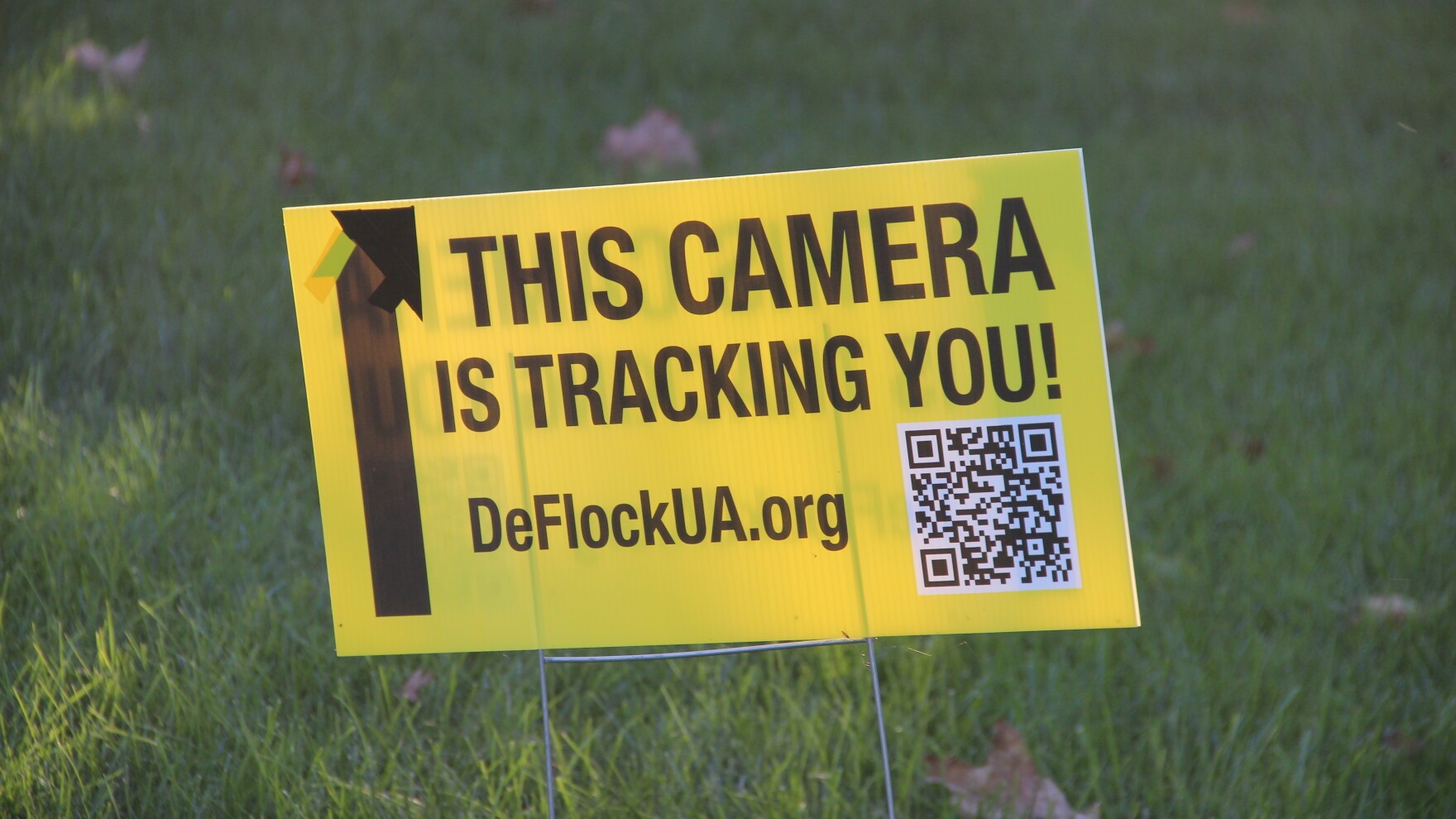
A grassroots campaign in Upper Arlington is organizing a municipal ballot initiative to remove all 20 of the city's automated license plate reader cameras and establish a permanent citizen commission to oversee future surveillance technology.
The effort marks a direct challenge to the city's camera network, contrasting an abolitionist grassroots drive with a regulatory compromise pending before Upper Arlington City Council that would establish a three-tiered judicial access framework while keeping the cameras mounted.
Grassroots Ballot Initiative Drive
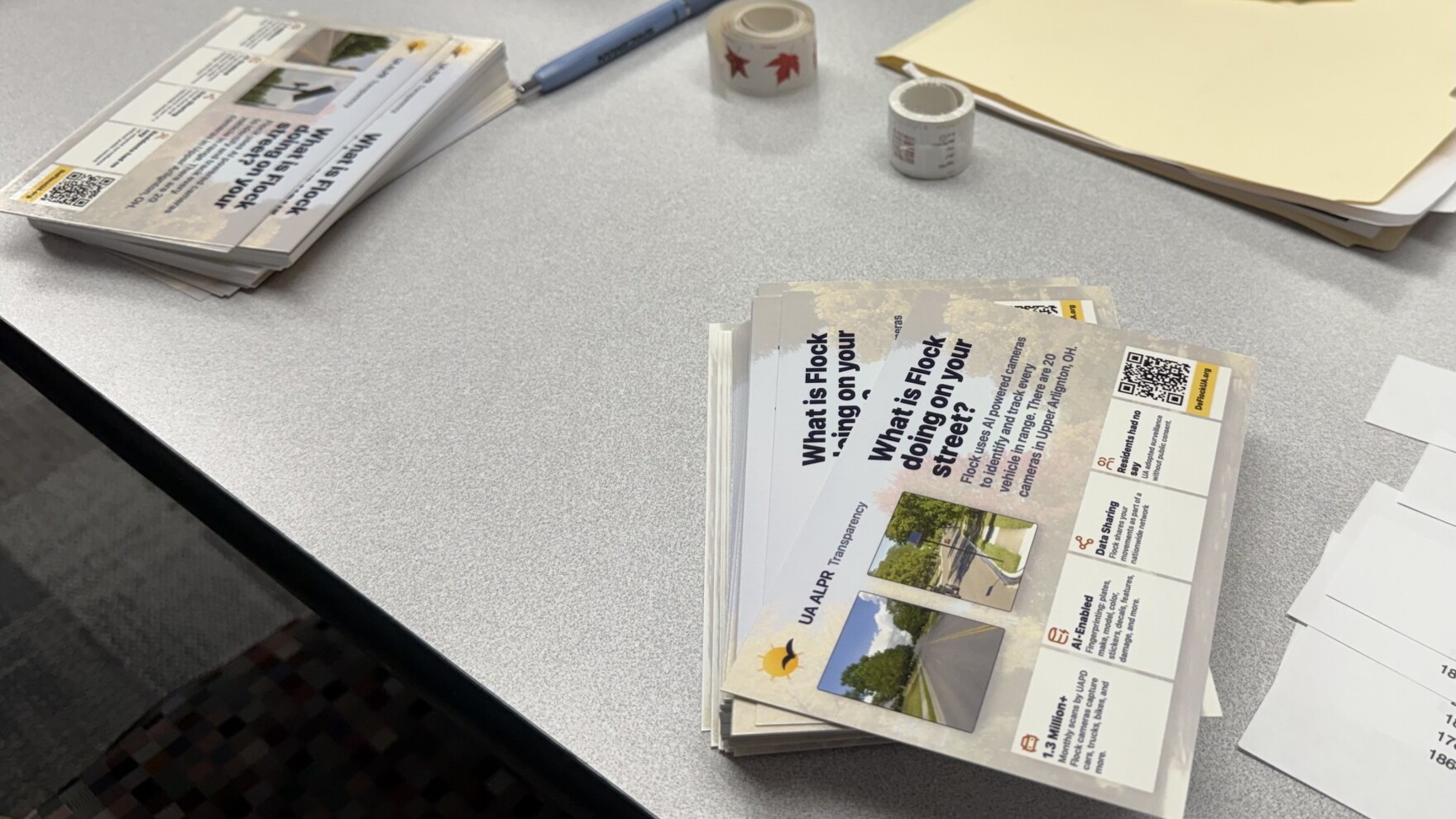
DeFlock Upper Arlington held its inaugural meeting on June 13, 2026, at the Tremont Branch library, where six people attended, including co-founders Paul Shannon and Christian Gabis. Upper Arlington originally signed its contract with vendor Flock Safety in December 2020, installing 20 cameras stationed primarily along arterial roadways entering and exiting the municipality.
The group's campaign has expanded rapidly since summer, drawing nearly 50 residents to recent meetings and building an email network of approximately 200 supporters. Organizers announced that their proposed municipal ballot measure will pursue two central objectives: removing all Flock cameras from Upper Arlington and creating a permanent, citizen-led commission empowered to evaluate and approve future police surveillance technology.
Gabis estimated that the campaign needs approximately 1,300 valid signatures from registered Upper Arlington voters to qualify the initiative for the municipal ballot. With an active volunteer base, Gabis noted that gathering roughly six signatures per email list member would put the measure over its qualification threshold.
Shannon and Gabis emphasized that privacy concerns cut across conventional ideological alignments. Shannon noted that the effort has united residents across the political spectrum: “This isn't left versus right, as so many things are,” Shannon said. “This is up versus down. I think this is one of the first issues to really bring that battle to the forefront, which is why we've been able to get people from across the spectrum.”
Gabis explained that the proposal for a citizen surveillance commission is intended to provide lasting structural oversight: “We don't want to just play whack-a-mole with technologies forever,” Gabis said. “We want something in place to protect our city against, you know, future technologies.”
Strict Anti-Vandalism Stance and Regional Alliances
While camera opposition has intensified across central Ohio, DeFlock Upper Arlington has adopted an unequivocal stance against tampering with or vandalizing surveillance equipment. In neighboring Gahanna, three Flock cameras were vandalized, with two poles cut down and one camera unit stolen.
At DeFlock Upper Arlington's September meeting, Gabis instructed volunteers to focus entirely on legal petitioning and civic reform: “do not touch the cameras. Don't go near the cameras. You can look at them, but just don't touch them. There's no reason to go about vandalizing anything,” Gabis said. “The city put them up, the city can take them down. It's not something we want to get close to. It's not worth catching felony charges over the cameras.”
Beyond local neighborhood organizing, DeFlock Upper Arlington has coordinated with regional civil liberties organizations. The group joined the Safety Not Surveillance Coalition alongside organizations such as the People's Justice Project, Equality Ohio, and 614 ICE Watch.
Council Advances Magisterial Warrant Compromise
The grassroots push for complete camera removal stands in sharp contrast to the regulatory model advancing through Upper Arlington City Council.
On Oct. 5, 2026, City Council held its first reading on Ordinance No. 38-2026, which amends Chapter 143 (Department of Public Safety) and Chapter 171 (Mayor's Court) of the city code to establish comprehensive standards for automated license plate reader data).
Drafted by City Attorney Darren Shulman and Police Chief Keith Hall, the ordinance establishes a three-tiered access system under Police Division Policy 303.18:
- Authorized patrol officers may search scan records from the preceding 48 hours without supervisory or judicial approval for official law enforcement purposes.
- Searches covering three to eight days require authorization from a supervisor holding the rank of Sergeant or above, or assignment to Criminal Investigations Bureau detectives.
- Queries into data nine to 30 days old require prior approval from an Upper Arlington Mayor's Court magistrate, municipal judge, or common pleas court judge, with searches beyond 30 days prohibited because Flock Safety purges capture data after 30 days).
Under the ordinance, magistrate applications must satisfy a search-warrant probable cause standard and be narrowly tailored to the investigative need). City officials explained that assigning Mayor's Court magistrates resolved legal obstacles, as municipalities face procedural difficulties obtaining formal Fourth Amendment search warrants for databases contracted and maintained by city government).
The legislative push followed the Police Division's rollout of a public Flock Camera Safety Transparency Portal on July 30, 2026, which publishes department policies, system statistics, and privacy safeguards.
Regional Surveillance Scrutiny
Upper Arlington's debate reflects a broader regional reconsideration of automated surveillance across Franklin County. Reynoldsburg cancelled its municipal Flock contract, Worthington Schools discontinued its camera contract, Columbus paused its 66-camera network pending legislative review, and Hilliard paused camera operations.
Previously, Pique Media reported on Oct. 1 that city leaders had proposed judicial oversight and tiered rules for police automated license plate searches (Upper Arlington Proposes Judicial Oversight and Tiered Rules for Police License Plate Searches).
While City Council deliberates Ordinance No. 38-2026 ahead of committee reviews and final action, DeFlock Upper Arlington organizers are proceeding with their signature drive, seeking to give residents the final say on whether automated surveillance cameras remain on Upper Arlington roads.
How we know this
The sources and records behind this story, with the facts they support.
Supporting evidence (10)
DeFlock Upper Arlington held its inaugural meeting on June 13, 2026, at the Tremont Branch library, where six people attended, including co-founders Paul Shannon and Christian Gabis.
Read supporting passage
On June 13, the DeFlock chapter of Upper Arlington held its first meeting. It would be the first DeFlock group in central Ohio. Six people showed up, including the group's two founders, Paul Shannon and Christian Gabis.The organization aims to have Flock cameras removed from the community.
Upper Arlington originally signed its contract with vendor Flock Safety in December 2020, installing 20 cameras stationed primarily along arterial roadways entering and exiting the municipality.
Read supporting passage
Upper Arlington signed its contract with Flock in December 2020.
Upper Arlington originally signed its contract with vendor Flock Safety in December 2020, installing 20 cameras stationed primarily along arterial roadways entering and exiting the municipality.
Read supporting passage
Upper Arlington has 20 cameras, many of them stationed at major roads entering and exiting the municipality's limits.
Organizers announced that their proposed municipal ballot measure will pursue two central objectives: removing all Flock cameras from Upper Arlington and creating a permanent, citizen-led commission empowered to evaluate and approve future police surveillance technology.
Read supporting passage
The ballot initiative is still in its early stages. Shannon and Gabis said the goal is to introduce something that would do two things: get Flock out of Upper Arlington and create a citizen-led commission for future police surveillance technology.
Gabis estimated that the campaign needs approximately 1,300 valid signatures from registered Upper Arlington voters to qualify the initiative for the municipal ballot.
Read supporting passage
Gabis estimates the group needs close to 1,300 signatures to make the ballot. He and Shannon said with DeFlock Upper Arlington’s current email list of around 200, and with that number growing, it doesn’t seem too far fetched.
Shannon noted that the effort has united residents across the political spectrum: “This isn't left versus right, as so many things are,” Shannon said.
Read supporting passage
“This isn't left versus right, as so many things are,” Shannon said. “This is up versus down. I think this is one of the first issues to really bring that battle to the forefront, which is why we've been able to get people from across the spectrum.”
Gabis explained that the proposal for a citizen surveillance commission is intended to provide lasting structural oversight: “We don't want to just play whack-a-mole with technologies forever,” Gabis said.
Read supporting passage
“We don't want to just play whack-a-mole with technologies forever," Gabis said. “We want something in place to protect our city against, you know, future technologies.”
In neighboring Gahanna, three Flock cameras were vandalized, with two poles cut down and one camera unit stolen.
Read supporting passage
Gahanna had three of its cameras vandalized, with two poles cut down and one camera stolen.
At DeFlock Upper Arlington's September meeting, Gabis instructed volunteers to focus entirely on legal petitioning and civic reform: “do not touch the cameras.
Read supporting passage
"I think one of the first things I said was do not touch the cameras. Don't go near the cameras. You can look at them, but just don't touch them. There's no reason to go about vandalizing anything," Gabis said. "The city put them up, the city can take them down. It's not something we want to get close to. It's not worth catching felony charges over the cameras."
Reynoldsburg cancelled its municipal Flock contract, Worthington Schools discontinued its camera contract, Columbus paused its 66-camera network pending legislative review, and Hilliard paused camera operations.
Read supporting passage
Reynoldsburg has canceled its Flock contract. So has Worthington Schools. Upper Arlington is discussing legislation on Flock use. And Columbus has paused its Flock camera use
Supporting evidence (1)
The group joined the Safety Not Surveillance Coalition alongside organizations such as the People's Justice Project, Equality Ohio, and 614 ICE Watch.
Read supporting passage
(PJP is joined in the Safety Not Surveillance Coalition by the likes of Equality Ohio, DeFlock Upper Arlington, and 614 ICE Watch, among others.)
Supporting evidence (4)
On Oct. 5, 2026, City Council held its first reading on Ordinance No. 38-2026, which amends Chapter 143 (Department of Public Safety) and Chapter 171 (Mayor's Court) of the city code to establish comprehensive standards for automated license plate reader data.
Read supporting passage
Ordinance No. 38-2026 - To Amend Chapter 143 - Department of Public Safety and Chapter 171 - Mayor's Court of Part 1 - Administrative Code of the Upper Arlington Code of Ordinances Related to Automated License Plate Reader Sections
Queries into data nine to 30 days old require prior approval from an Upper Arlington Mayor's Court magistrate, municipal judge, or common pleas court judge, with searches beyond 30 days prohibited because Flock Safety purges capture data after 30 days.
Read supporting passage
This legislative change facilitates changes to UAPD Policy 303.18 is revised to create three access levels: (1) 0–2 days: authorized users may search for a legitimate law-enforcement purpose; (2) 3–8 days: searches are limited to CIB personnel supporting an active investigation or users with prior supervisor approval; and (3) 9–30 days: judicial or magisterial approval is required. Searches beyond 30 days are not permitted because Flock Safety retains data for 30 days.
Under the ordinance, magistrate applications must satisfy a search-warrant probable cause standard and be narrowly tailored to the investigative need.
Read supporting passage
The application must satisfy a probable-cause standard and be narrowly tailored to the information sought. Section 171.01 is amended to include review of these applications among the duties of Mayor's Court magistrates.
City officials explained that assigning Mayor's Court magistrates resolved legal obstacles, as municipalities face procedural difficulties obtaining formal Fourth Amendment search warrants for databases contracted and maintained by city government.
Read supporting passage
First, warrants are typically granted to get data from third parties (such as phone companies). Staff has concerns that it would be procedurally unable to get a warrant for its own data. However, staff has tried to build in the same protections through the recommended approval process, which uses the same standard that is required to get a warrant.
https://www.upperarlingtonoh.gov/m/newsflash/Archive/Item/328?arcId=692
Supporting evidence (1)
The legislative push followed the Police Division's rollout of a public Flock Camera Safety Transparency Portal on July 30, 2026, which publishes department policies, system statistics, and privacy safeguards.
Read supporting passage
To provide residents with greater insight into one of the tools used to support public safety, the Division has launched a new Flock Camera Safety Transparency Portal. The portal provides information about the Division's use of Flock Safety automated license plate reader (ALPR) technology, including department policies, usage statistics and privacy safeguards.
Upper Arlington Proposes Judicial Oversight and Tiered Rules for Police License Plate Searches
Supporting evidence (1)
Previously, Pique Media reported on Oct. 1 that city leaders had proposed judicial oversight and tiered rules for police automated license plate searches (Upper Arlington Proposes Judicial Oversight and Tiered Rules for Police License Plate Searches).
Read supporting passage
Upper Arlington Proposes Judicial Oversight and Tiered Rules for Police License Plate Searches