
Columbus Council Weighs $249,000 Youth Violence Prevention Contract
The agreement with the National Institute for Criminal Justice Reform follows an analysis that identified coordination gaps among local groups.
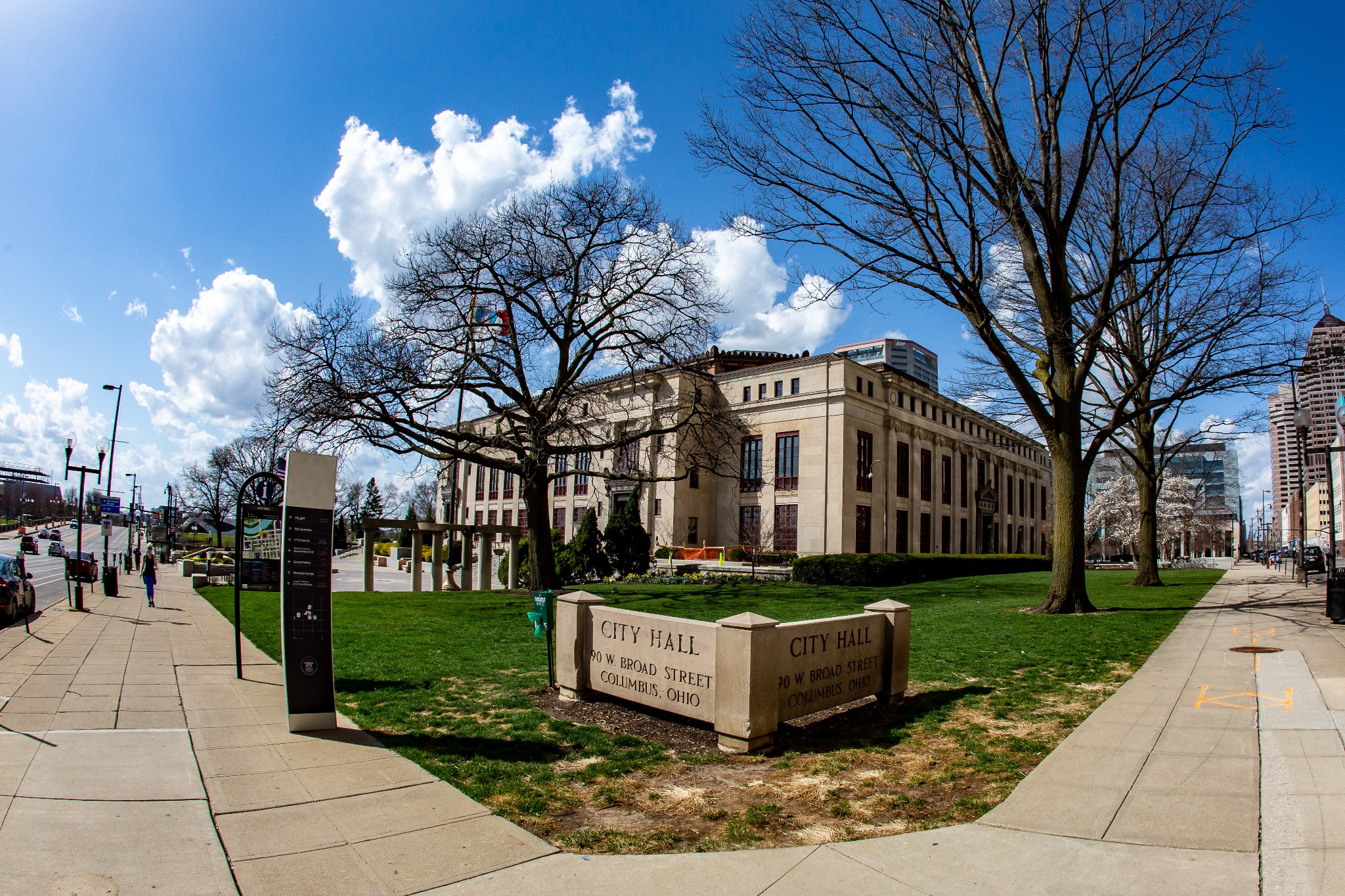
Columbus City Hall and entrance marker at 90 West Broad Street in downtown Columbus.
Credit: General Ization / Wikimedia Commons Image source
On the agenda for Monday, Oct. 26, Columbus City Council is scheduled to consider emergency legislation authorizing a $249,012 service contract with the National Institute for Criminal Justice Reform to coordinate youth gun violence reduction and prevention efforts across the community.
The legislation authorizes the expenditure of $249,012.38 from the city's General Fund and designates the agreement as an emergency measure. Council members are scheduled to convene at 5 p.m. in Council Chambers.
The Columbus Office of Violence Prevention began working with the National Institute for Criminal Justice Reform in February 2024 to understand local intervention efforts, according to reporting by WSYX. The city agency subsequently published the 2024 Community Violence Intervention Landscape Analysis. Director Rena Shak said the study provided a breakdown of community-based organizations and city-funded programs with the goal of creating a coordinated intervention ecosystem.
The landscape analysis identified major challenges facing local intervention organizations, led by a lack of collaboration and coordination among violence reduction programs and services. The landscape analysis also cited resource and operational hurdles, including a lack of stable funding and discretionary crisis funds for participants, difficulties maintaining consistent participant engagement, barriers to serving the Somali community, and a need for training in data-driven decision-making.
To address those gaps, the institute's report outlined five key recommendations, including establishing an emergency response protocol, expanding collaboration across organizations, identifying and engaging individuals facing the highest risk of gun violence involvement, delivering training and technical assistance to anti-violence groups, and clarifying service types among providers.
Shak noted during the earlier review that while more than 100 intervention professionals gathered for city discussions, most had never worked together previously. She emphasized that a cohesive community violence intervention ecosystem cannot succeed without voices with lived experience.
How we know this
The sources and records behind this story, with the facts they support.
Columbus City Council · 2026-10-26
Supporting evidence (4)
On the agenda for Monday, Oct. 26, Columbus City Council is scheduled to consider emergency legislation authorizing a $249,012 service contract with the National Institute for Criminal Justice Reform to coordinate youth gun violence reduction and prevention efforts across the community.
Read supporting passage
REGULAR MEETING NO. 47 OF COLUMBUS CITY COUNCIL, MONDAY, OCTOBER 26, 2026 at 5:00 P.M. IN COUNCIL CHAMBERS.
On the agenda for Monday, Oct. 26, Columbus City Council is scheduled to consider emergency legislation authorizing a $249,012 service contract with the National Institute for Criminal Justice Reform to coordinate youth gun violence reduction and prevention efforts across the community.
Read supporting passage
2803-2026 · To authorize the Director of the Office of Violence Prevention to enter into a not-for-profit service contract with the National Institute for Criminal Justice Reform to coordinate efforts to reduce gun violence and violence prevention amongst youth in the community; to authorize the expenditure of $249,012.38 from the general fund; and to declare an emergency. ($249,012.38)
The legislation authorizes the expenditure of $249,012.38 from the city's General Fund and designates the agreement as an emergency measure.
Read supporting passage
To authorize the Director of the Office of Violence Prevention to enter into a not-for-profit service contract with the National Institute for Criminal Justice Reform to coordinate efforts to reduce gun violence and violence prevention amongst youth in the community; to authorize the expenditure of $249,012.38 from the general fund; and to declare an emergency.
Council members are scheduled to convene at 5 p.m. in Council Chambers.
Read supporting passage
REGULAR MEETING NO. 47 OF COLUMBUS CITY COUNCIL, MONDAY, OCTOBER 26, 2026 at 5:00 P.M. IN COUNCIL CHAMBERS.
Supporting evidence (8)
The Columbus Office of Violence Prevention began working with the National Institute for Criminal Justice Reform in February 2024 to understand local intervention efforts, according to reporting by WSYX.
Read supporting passage
The recently released analysis was completed through a contract with the National Institute for Criminal Justice Reform.View post on XDirector of the Office of Violence Prevention Rena Shak said her office has been working with the institute since February 2024 to understand the current community violence intervention landscape and to help the office learn which community group is providing what in Columbus.
The city agency subsequently published the 2024 Community Violence Intervention Landscape Analysis.
Read supporting passage
The Office of Violence Prevention (OVP) has released its 2024 Community Violence Intervention Landscape Analysis.
Director Rena Shak said the study provided a breakdown of community-based organizations and city-funded programs with the goal of creating a coordinated intervention ecosystem.
Read supporting passage
Shak said the analysis provided a breakdown of Columbus’ community-based organizations and city-funded programs with the goal of creating a community violence intervention (CVI) ecosystem.
The landscape analysis identified major challenges facing local intervention organizations, led by a lack of collaboration and coordination among violence reduction programs and services.
Read supporting passage
According to the analysis, the major challenges faced by Columbus CIV organization include:Lack of collaboration and coordination among violent reduction programs and services
The landscape analysis also cited resource and operational hurdles, including a lack of stable funding and discretionary crisis funds for participants, difficulties maintaining consistent participant engagement, barriers to serving the Somali community, and a need for training in data-driven decision-making.
Read supporting passage
Lack of stable funding and discretionary funds for participants in crisisDifficulty ensuring consistent and sustained participant engagementBarries to serving the Somali communityNeed for training on data-driven decision-making
To address those gaps, the institute's report outlined five key recommendations, including establishing an emergency response protocol, expanding collaboration across organizations, identifying and engaging individuals facing the highest risk of gun violence involvement, delivering training and technical assistance to anti-violence groups, and clarifying service types among providers.
Read supporting passage
The landscape analysis offeredfiverecommendationsto properlypositionthe office for the creation of a successful community violence intervention ecosystem: Emergency response planCollaborations across organizationsIdentifying and engaging with those who are most at risk of gun violence involvementProviding training and technical assistance to anti-violence organizationCommunicating and clarifying service types amongst program providers
Shak noted during the earlier review that while more than 100 intervention professionals gathered for city discussions, most had never worked together previously.
Read supporting passage
For the first time ever we were able to bring over 100 of the community violence intervention professionals that are working in the city of Columbus all under the same roof. Previous to that, the majority of them had not worked together.
She emphasized that a cohesive community violence intervention ecosystem cannot succeed without voices with lived experience.
Read supporting passage
"Frankly, a cohesive CVI ecosystem does not work and cannot succeed without the voices of those with lived experience," Shak said.