
Columbus City Council Advances $400,000 Synagro Biosolids Renewal After 2026 Spending Surge
Program spending on liquid biosolids injection reached $373,472.13 through Oct. 23, nearly 30 times the 2025 total, as a second contract renewal and a proposed 4% sewer rate increase await final votes.
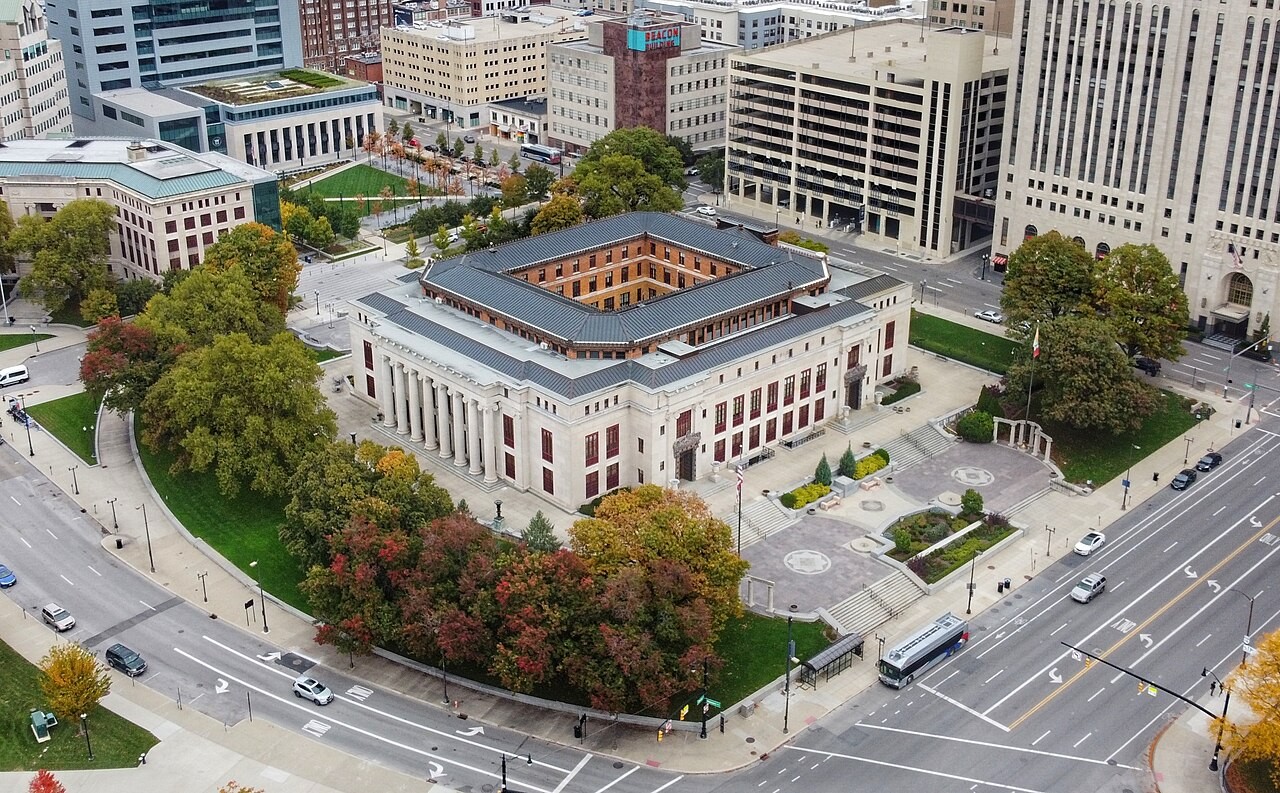
Columbus City Hall at 90 W. Broad St. in downtown Columbus, where City Council gave first reading on Nov. 16, 2026, to a proposed $400,000 biosolids contract renewal. Photo by Jsjessee / Wikimedia Commons (CC BY-SA 2.0).
Credit: Jsjessee / Wikimedia Commons Image source
Columbus City Council advanced a proposed $400,000 contract modification and renewal with Synagro Central, LLC on Nov. 16, 2026, to continue liquid biosolids land application through March 31, 2028.
The measure for Columbus Water and Power's Division of Water Reclamation now stands at second reading status with no final vote yet, ahead of Council's next regular meeting scheduled for 5 p.m. Monday, Nov. 23, 2026, in City Council Chambers, Room 231.
Under the contract, Synagro hauls and subsurface-injects 8% total-solid liquid biosolids below the surface to meet grain-crop nutrient needs, while locating and permitting farm ground and handling soil sampling and agronomic calculations. Reported program spending climbed nearly 30-fold in 2026, reaching $373,472.13 through Oct. 23, 2026, after totaling $12,716.69 in 2025 and $59,857.70 in 2024.
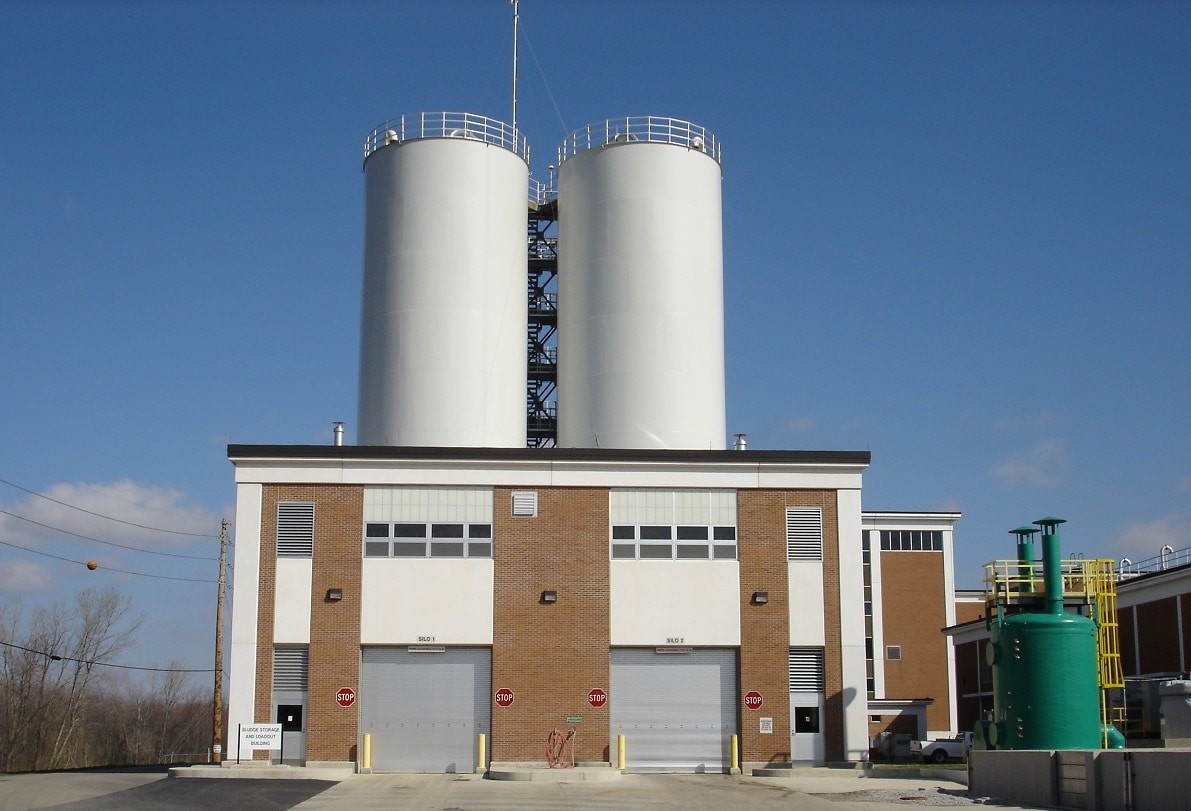
The Sludge Storage and Loadout Building and twin storage silos at Columbus's Southerly Wastewater Treatment Plant. Photo courtesy of Schwing Bioset, Inc.
Credit: Schwing Bioset, Inc. · Supplied image Image source
Rapid renewal pace and shifting contractor lineup
The proposed extension is the second renewal roughly one year after Columbus Water and Power opened four competitive proposals on Sept. 10, 2025, and selected Synagro. Council approved an initial $800,000 contract for Synagro's liquid biosolids land application on its Nov. 24, 2025, consent agenda.
On March 23, 2026, Council enacted an emergency renewal adding $0 in new money on the consent agenda. While the pending ordinance states the March action authorized the first of three one-year renewals and intends this measure as the second option, its drafting mixes numbering: item 1 labels the measure "modification No. 1", whereas item 2 and section 2 call it "modification No. 2."
Columbus's prior liquid biosolids contract with Deer Valley Farm Supply served the Southerly Wastewater Treatment Plant, Jackson Pike Wastewater Treatment Plant and the Compost Facility. Deer Valley's extended contract term ran through July 31, 2026, following program outlays of $439,555.15 in 2024 and $306,553.85 through Nov. 4, 2025.
City legislative filings for the Synagro renewal do not state why 2026 spending surged, why a second renewal is proposed roughly a year after the initial award, or which specific farm sites and counties receive the biosolids.
Companion biosolids renewal and sewer rate proposal
Also on Nov. 16, 2026, Council advanced a proposed $1.4 million contract renewal with Quasar Energy Group LLC to second reading status to transport and apply biosolids onto pasture land and abandoned minelands, where spending grew from $0 in 2024 and 2025 to $472,018.15 through Oct. 23, 2026.
In parallel, Columbus Water and Power is seeking a 4% sanitary sewer rate increase starting Jan. 1, 2027, that also sits at second reading status and would generate about $12.1 million in additional Sewer Operating Fund revenue in fiscal year 2027 if enacted. Combined with proposed 2027 water and storm increases, the city projects an inside-city household using 5,236 gallons a month would pay $10.29 more per month, or $123.48 a year. The rate proposal would also raise the income-qualified sewer commodity discount from 30% to 35%, continue senior fee waivers and expand household eligibility.
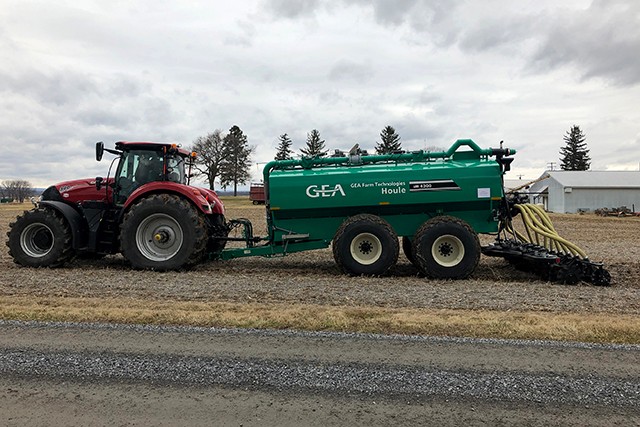
Contextual photo: A tractor pulls a liquid tanker fitted with a subsurface injection toolbar across harvested crop stubble during USDA Agricultural Research Service research in central Pennsylvania; this photo does not depict Synagro or Columbus operations. Photo by USDA Agricultural Research Service.
Credit: ARS Pasture Systems and Watershed Management Research Unit / USDA Agricultural Research Service (D4907-1) Image source
State subsurface injection and drainage rules
Updated state Class B biosolids rules that took effect March 1, 2026, cap liquid applications at the calculated agronomic rate or the available water capacity of the upper eight inches of soil, whichever is less.
Subsurface injection narrows mandatory setbacks from occupied structures, schools and private potable water sources to 100 feet instead of 300 feet for surface spreading, and from medical care facilities to 300 feet instead of 1,000 feet, while maintaining 33-foot buffers from surface waters and 1,500-foot setbacks from public drinking water intakes. Injection also allows application when forecasts show at least a 50% chance of 0.5 inches or more of rain within 24 hours, when unincorporated surface application is barred.
On sites with subsurface tile drainage, applicators must cap liquid volume at the lesser of upper-soil water capacity or 13,500 gallons per acre, and either till soil at least three inches below the injection depth or plug tile outlets where tillage is not an option. Operators must also visually monitor drain outlets before, during, every three hours of application and at least every 24 hours afterward until biosolids are assimilated.
Pique’s reporting on the same events, newest first.
Columbus Latest
Columbus City Council Approves $1 Million Biosolids Digestion Renewal With Suburban Sales
The unanimous vote extends offsite processing of up to 20% of city sewage sludge through 2027 to divert organic waste from landfills.
Columbus You are reading
Columbus City Council Advances $400,000 Synagro Biosolids Renewal After 2026 Spending Surge
Columbus
Columbus Advances $400,000 Power Division Waste and Spill Cleanup Bill
Ordinance 3040-2026 moved past first reading Nov. 16 to shift $400,000 within the Electricity Operating Fund—roughly 4.7 times the Division of Power's 2025 waste cleanup spending.
How we know this
The sources and records behind this story, with the facts they support.
Supporting evidence (14)
Columbus City Council advanced a proposed $400,000 contract modification and renewal with Synagro Central, LLC on Nov. 16, 2026, to continue liquid biosolids land application through March 31, 2028.
Read supporting passage
To authorize the Director of Columbus Water and Power to modify and renew the contract with Synagro Central, LLC to provide liquid land application of biosolids for the Division of Water Reclamation, and to authorize the expenditure of $400,000.00 from the Sewer Operating Sanitary Fund. ($400,000.00)
Columbus City Council advanced a proposed $400,000 contract modification and renewal with Synagro Central, LLC on Nov. 16, 2026, to continue liquid biosolids land application through March 31, 2028.
Read supporting passage
WHEREAS, The Department of Columbus Water and Power wishes to renew the contract for an additional year, up to and including March 31, 2028 and provide funding for the same services as under the original agreement;
The measure for Columbus Water and Power's Division of Water Reclamation now stands at second reading status with no final vote yet, ahead of Council's next regular meeting scheduled for 5 p.m. Monday, Nov. 23, 2026, in City Council Chambers, Room 231.
Read supporting passage
This ordinance authorizes the Director of Columbus Water and Power to modify and renew a contract for liquid land application of biosolids with Synagro Central, LLC. This contract provides biosolids disposal and beneficial reuse services for the Division of Water Reclamation.
The measure for Columbus Water and Power's Division of Water Reclamation now stands at second reading status with no final vote yet, ahead of Council's next regular meeting scheduled for 5 p.m. Monday, Nov. 23, 2026, in City Council Chambers, Room 231.
Read supporting passage
File=3042-2026, Legislation type=Ordinance, Municipality=columbus, Status=Second Reading, Text version=1
Under the contract, Synagro hauls and subsurface-injects 8% total-solid liquid biosolids below the surface to meet grain-crop nutrient needs, while locating and permitting farm ground and handling soil sampling and agronomic calculations.
Read supporting passage
Liquid land application is one of the city’s longest utilized outlets and involves the subsurface injection of 8% total solid biosolids below the surface to meet the agronomic need of grain crops. The Contractor hauls and applies biosolids in addition to locating and permitting ground for land application. They are responsible for all soil sampling and agronomic calculations necessary of beneficial use site operators.
Reported program spending climbed nearly 30-fold in 2026, reaching $373,472.13 through Oct. 23, 2026, after totaling $12,716.69 in 2025 and $59,857.70 in 2024.
Read supporting passage
$373,472.13 has been spent so far in 2026 as of 10/23/2026
Reported program spending climbed nearly 30-fold in 2026, reaching $373,472.13 through Oct. 23, 2026, after totaling $12,716.69 in 2025 and $59,857.70 in 2024.
Read supporting passage
$12,716.69 was spent in 2025
Reported program spending climbed nearly 30-fold in 2026, reaching $373,472.13 through Oct. 23, 2026, after totaling $12,716.69 in 2025 and $59,857.70 in 2024.
Read supporting passage
$59,857.70 was spent in 2024
The proposed extension is the second renewal roughly one year after Columbus Water and Power opened four competitive proposals on Sept. 10, 2025, and selected Synagro.
Read supporting passage
The original contract was authorized by Ordinance 2780-2025. Ordinance 0658-2026 authorized the first of three one (1) year renewals. This Ordinance is intended to authorize the second renewal option. The contract language allows for three (3) one (1) year renewal options on a year to year basis upon mutual agreement, availability of funds, and approval by Columbus City Council.
The proposed extension is the second renewal roughly one year after Columbus Water and Power opened four competitive proposals on Sept. 10, 2025, and selected Synagro.
Read supporting passage
Four proposals were received and opened on September 10, 2025. Discussions and negotiations with the selected firm resulted in the award of the contract to Synagro Central, LLC.
While the pending ordinance states the March action authorized the first of three one-year renewals and intends this measure as the second option, its drafting mixes numbering: item 1 labels the measure "modification No. 1", whereas item 2 and section 2 call it "modification No. 2."
Read supporting passage
The original contract was authorized by Ordinance 2780-2025. Ordinance 0658-2026 authorized the first of three one (1) year renewals. This Ordinance is intended to authorize the second renewal option. The contract language allows for three (3) one (1) year renewal options on a year to year basis upon mutual agreement, availability of funds, and approval by Columbus City Council.
While the pending ordinance states the March action authorized the first of three one-year renewals and intends this measure as the second option, its drafting mixes numbering: item 1 labels the measure "modification No. 1", whereas item 2 and section 2 call it "modification No. 2."
Read supporting passage
The total amount of additional funds needed for this contract modification No. 1 is ADD $400,000.00.
While the pending ordinance states the March action authorized the first of three one-year renewals and intends this measure as the second option, its drafting mixes numbering: item 1 labels the measure "modification No. 1", whereas item 2 and section 2 call it "modification No. 2."
Read supporting passage
This modification No. 2 is to provide the funding necessary for the payment of services to be provided through March 2028.
While the pending ordinance states the March action authorized the first of three one-year renewals and intends this measure as the second option, its drafting mixes numbering: item 1 labels the measure "modification No. 1", whereas item 2 and section 2 call it "modification No. 2."
Read supporting passage
SECTION 2. That this contract modification No. 2 is in accordance with the relevant provisions of Chapter 329 of City Code.
https://columbus.legistar.com/Calendar.aspx
Supporting evidence (5)
Columbus City Council advanced a proposed $400,000 contract modification and renewal with Synagro Central, LLC on Nov. 16, 2026, to continue liquid biosolids land application through March 31, 2028.
Read supporting passage
11/16/2026
The measure for Columbus Water and Power's Division of Water Reclamation now stands at second reading status with no final vote yet, ahead of Council's next regular meeting scheduled for 5 p.m. Monday, Nov. 23, 2026, in City Council Chambers, Room 231.
Read supporting passage
5:00 PM
The measure for Columbus Water and Power's Division of Water Reclamation now stands at second reading status with no final vote yet, ahead of Council's next regular meeting scheduled for 5 p.m. Monday, Nov. 23, 2026, in City Council Chambers, Room 231.
Read supporting passage
11/23/2026
The measure for Columbus Water and Power's Division of Water Reclamation now stands at second reading status with no final vote yet, ahead of Council's next regular meeting scheduled for 5 p.m. Monday, Nov. 23, 2026, in City Council Chambers, Room 231.
Read supporting passage
City Council Chambers, Rm 231
Also on Nov. 16, 2026, Council advanced a proposed $1.4 million contract renewal with Quasar Energy Group LLC to second reading status to transport and apply biosolids onto pasture land and abandoned minelands, where spending grew from $0 in 2024 and 2025 to $472,018.15 through Oct. 23, 2026.
Read supporting passage
11/16/2026
Supporting evidence (4)
Council approved an initial $800,000 contract for Synagro's liquid biosolids land application on its Nov. 24, 2025, consent agenda.
Read supporting passage
authorize the expenditure of $800,000.00 from the Sewer Operating Sanitary Fund. ($800,000.00)
Council approved an initial $800,000 contract for Synagro's liquid biosolids land application on its Nov. 24, 2025, consent agenda.
Read supporting passage
Synagro Central, LLC to provide liquid land application of biosolids for
Council approved an initial $800,000 contract for Synagro's liquid biosolids land application on its Nov. 24, 2025, consent agenda.
Read supporting passage
Monday, November 24, 2025
Council approved an initial $800,000 contract for Synagro's liquid biosolids land application on its Nov. 24, 2025, consent agenda.
Read supporting passage
This item was approved on the Consent Agenda.
Supporting evidence (3)
On March 23, 2026, Council enacted an emergency renewal adding $0 in new money on the consent agenda.
Read supporting passage
Monday, March 23, 2026
On March 23, 2026, Council enacted an emergency renewal adding $0 in new money on the consent agenda.
Read supporting passage
To authorize the Director of the Department of Public Utilities to renew the existing contract with Synagro Central, LLC to provide liquid land application of biosolids for the Division of Water Reclamation; and to declare an emergency. ($0.00)
On March 23, 2026, Council enacted an emergency renewal adding $0 in new money on the consent agenda.
Read supporting passage
This item was approved on the Consent Agenda.
Supporting evidence (5)
Columbus's prior liquid biosolids contract with Deer Valley Farm Supply served the Southerly Wastewater Treatment Plant, Jackson Pike Wastewater Treatment Plant and the Compost Facility.
Read supporting passage
To authorize the Director of Water and Power to modify a contract with Deer Valley Farm Supply for the Class B Liquid Biosolids Land Application Program to add additional funding; to authorize the expenditure of $250,000.00 from the Sanitary Sewerage Operating Fund. ($250,000.00)
Columbus's prior liquid biosolids contract with Deer Valley Farm Supply served the Southerly Wastewater Treatment Plant, Jackson Pike Wastewater Treatment Plant and the Compost Facility.
Read supporting passage
The contract is utilized by the Southerly Wastewater Treatment Plant, Jackson Pike Wastewater Treatment Plant and the Compost Facility.
Deer Valley's extended contract term ran through July 31, 2026, following program outlays of $439,555.15 in 2024 and $306,553.85 through Nov. 4, 2025.
Read supporting passage
Ordinance No. 0360-2025 extended the underlying contract through July 31, 2026.
Deer Valley's extended contract term ran through July 31, 2026, following program outlays of $439,555.15 in 2024 and $306,553.85 through Nov. 4, 2025.
Read supporting passage
$439,555.15 was spent in 2024
Deer Valley's extended contract term ran through July 31, 2026, following program outlays of $439,555.15 in 2024 and $306,553.85 through Nov. 4, 2025.
Read supporting passage
$306,553.85 has been spent so far in 2025 as of 11/4/2025
Supporting evidence (5)
Also on Nov. 16, 2026, Council advanced a proposed $1.4 million contract renewal with Quasar Energy Group LLC to second reading status to transport and apply biosolids onto pasture land and abandoned minelands, where spending grew from $0 in 2024 and 2025 to $472,018.15 through Oct. 23, 2026.
Read supporting passage
To authorize the Director of Columbus Water and Power to modify and renew the contract with Quasar Energy Group LLC for the transport and application of biosolids for the Division of Water Reclamation; and to authorize the expenditure of $1,400,000.00 from the Sewer Operating Sanitary Fund. ($1,400,000.00)
Also on Nov. 16, 2026, Council advanced a proposed $1.4 million contract renewal with Quasar Energy Group LLC to second reading status to transport and apply biosolids onto pasture land and abandoned minelands, where spending grew from $0 in 2024 and 2025 to $472,018.15 through Oct. 23, 2026.
Read supporting passage
File=2975-2026, Legislation type=Ordinance, Municipality=columbus, Status=Second Reading, Text version=1
Also on Nov. 16, 2026, Council advanced a proposed $1.4 million contract renewal with Quasar Energy Group LLC to second reading status to transport and apply biosolids onto pasture land and abandoned minelands, where spending grew from $0 in 2024 and 2025 to $472,018.15 through Oct. 23, 2026.
Read supporting passage
This ordinance authorizes the Director of Columbus Water and Power to modify and renew a contract with Quasar Energy Group for the transport and application of biosolids to no-till pasture lands and Ohio Department of Natural Resources Abandoned Minelands (AML) at Ohio Environmental Protection Agency (OEPA) approved rates in compliance with Ohio Administrative Code 3745-40.
Also on Nov. 16, 2026, Council advanced a proposed $1.4 million contract renewal with Quasar Energy Group LLC to second reading status to transport and apply biosolids onto pasture land and abandoned minelands, where spending grew from $0 in 2024 and 2025 to $472,018.15 through Oct. 23, 2026.
Read supporting passage
$0.00 was spent in 2025 $0.00 was spent in 2024
Also on Nov. 16, 2026, Council advanced a proposed $1.4 million contract renewal with Quasar Energy Group LLC to second reading status to transport and apply biosolids onto pasture land and abandoned minelands, where spending grew from $0 in 2024 and 2025 to $472,018.15 through Oct. 23, 2026.
Read supporting passage
$472,018.15 has been spent so far in 2026 as of 10/23/2026
Supporting evidence (5)
In parallel, Columbus Water and Power is seeking a 4% sanitary sewer rate increase starting Jan. 1, 2027, that also sits at second reading status and would generate about $12.1 million in additional Sewer Operating Fund revenue in fiscal year 2027 if enacted.
Read supporting passage
WHEREAS, the City of Columbus, Columbus Water and Power, Division of Water Reclamation, requests a four percent increase in sewer rates for 2027 to pay for necessary ongoing operations and needed improvements;
In parallel, Columbus Water and Power is seeking a 4% sanitary sewer rate increase starting Jan. 1, 2027, that also sits at second reading status and would generate about $12.1 million in additional Sewer Operating Fund revenue in fiscal year 2027 if enacted.
Read supporting passage
File=3159-2026, Legislation type=Ordinance, Municipality=columbus, Status=Second Reading, Text version=1
In parallel, Columbus Water and Power is seeking a 4% sanitary sewer rate increase starting Jan. 1, 2027, that also sits at second reading status and would generate about $12.1 million in additional Sewer Operating Fund revenue in fiscal year 2027 if enacted.
Read supporting passage
FISCAL IMPACT: These rate increases will generate approximately $12.1 million in additional revenue in the Sewer Operating Fund in Fiscal Year 2027.
Combined with proposed 2027 water and storm increases, the city projects an inside-city household using 5,236 gallons a month would pay $10.29 more per month, or $123.48 a year.
Read supporting passage
With the 2027 rates increases for water, sewer, and storm combined -- based on residential water usage of 5,236 gallons a month, or 175 gallons a day (which is also 7 centum cubic feet (ccf's) per month, or 21 (ccfs) a quarter), City of Columbus residents estimated bill increase is $10.29 per month, or $123.48 per year, or 9.9% above 2026.
The rate proposal would also raise the income-qualified sewer commodity discount from 30% to 35%, continue senior fee waivers and expand household eligibility.
Read supporting passage
The UAB recommends an increase to the percentage of the discount from 30% to 35%. Columbus Water and Power will also continue the senior income qualified discount that waives the monthly sewer service charges. The income qualified program is also being amended to allow for automatic enrollment, if applicable, as well as expanded household eligibility to allow any member living in the household to show they meet the program eligibility requirements, not just the individual who the account's name is in.
https://codes.ohio.gov/ohio-administrative-code/rule-3745-40-08
Supporting evidence (10)
Updated state Class B biosolids rules that took effect March 1, 2026, cap liquid applications at the calculated agronomic rate or the available water capacity of the upper eight inches of soil, whichever is less.
Read supporting passage
Rule 3745-40-08 | Requirements for the beneficial use of biosolids: general requirements, prohibitions, isolation distance requirements, site specific requirements, and additional site restrictions for the beneficial use of class B biosolids.
Updated state Class B biosolids rules that took effect March 1, 2026, cap liquid applications at the calculated agronomic rate or the available water capacity of the upper eight inches of soil, whichever is less.
Read supporting passage
March 1, 2026
Updated state Class B biosolids rules that took effect March 1, 2026, cap liquid applications at the calculated agronomic rate or the available water capacity of the upper eight inches of soil, whichever is less.
Read supporting passage
The beneficial use of liquid class B or bulk exceptional quality biosolids shall be at or below the calculated agronomic rate or at or below the available water capacity of the upper eight inches of soil, whichever is less at the time of beneficial use.
Subsurface injection narrows mandatory setbacks from occupied structures, schools and private potable water sources to 100 feet instead of 300 feet for surface spreading, and from medical care facilities to 300 feet instead of 1,000 feet, while maintaining 33-foot buffers from surface waters and 1,500-foot setbacks from public drinking water intakes.
Read supporting passage
Table C-1: Isolation distance requirements.Surface application isolation distance (feet)Injected or immediately incorporated isolation (feet)Applicable biosolids classificationBedrock33Class B or bulk exceptional qualitySurface waters of the state and conduits to surface waters of the state3333Class B or bulk exceptional qualitySinkhole or UIC class V drainage300 without a grass buffer; 100 with a grass buffer300 without a grass buffer; 100 with a grass bufferClass B or bulk exceptional qualityOccupied structure or school300100Class BPrivate potable water source300100Class BMedical care facility1000300Class BPublic drinking water surface water intake15001500Class B
Injection also allows application when forecasts show at least a 50% chance of 0.5 inches or more of rain within 24 hours, when unincorporated surface application is barred.
Read supporting passage
(ii) Except as provided in paragraph (B)(5)(b)(iii) of this rule, no person shall beneficially use class B or bulk exceptional quality biosolids when the forecast indicates that there is at least a fifty per cent chance that 0.5 inches or more of rain will occur within twenty-four hours after the conclusion of each day of beneficial use(iii) Class B or bulk exceptional quality biosolids may be beneficially used when the forecast indicates that there is at least a fifty per cent chance that 0.5 inches or more of rain will occur within twenty-four hours after beneficial use if either of the following occur:(a) The biosolids are injected.
On sites with subsurface tile drainage, applicators must cap liquid volume at the lesser of upper-soil water capacity or 13,500 gallons per acre, and either till soil at least three inches below the injection depth or plug tile outlets where tillage is not an option.
Read supporting passage
(5) Beneficial use of liquid class B or bulk exceptional quality biosolids at sites with subsurface tile drainage shall be in accordance with the following requirements:
On sites with subsurface tile drainage, applicators must cap liquid volume at the lesser of upper-soil water capacity or 13,500 gallons per acre, and either till soil at least three inches below the injection depth or plug tile outlets where tillage is not an option.
Read supporting passage
(c) Limit beneficial use rates to the lesser of the available water capacity in the upper eight inches or thirteen thousand five hundred gallons per acre (0.5 inches per acre) per application.
On sites with subsurface tile drainage, applicators must cap liquid volume at the lesser of upper-soil water capacity or 13,500 gallons per acre, and either till soil at least three inches below the injection depth or plug tile outlets where tillage is not an option.
Read supporting passage
Till the soil at least three inches below the depth of injection prior to or at the time of beneficial use.
On sites with subsurface tile drainage, applicators must cap liquid volume at the lesser of upper-soil water capacity or 13,500 gallons per acre, and either till soil at least three inches below the injection depth or plug tile outlets where tillage is not an option.
Read supporting passage
where tillage is not an option, plug all tile outlets
Operators must also visually monitor drain outlets before, during, every three hours of application and at least every 24 hours afterward until biosolids are assimilated.
Read supporting passage
(a) Visually monitor all subsurface drain outlets before, during, and after beneficial use of biosolids at the beneficial use site and record the results of that monitoring on forms approved by the director or director's authorized representative. Visual monitoring shall be performed at least every three hours during beneficial use, at the end of each beneficial use day, and immediately following the completion of beneficial use. Continue visual monitoring and recording observations at least once every twenty-four hours after completion of beneficial use until biosolids are assimilated into the beneficial use site and are no longer likely to discharge to surface waters of the state or conduits to surface waters of the state.