
Ohio Attorney General Clarifies County Veterans Service Commission Funding Duties
Formal legal guidance outlines mandatory budget appropriations, inside millage rules and year-end fund reversions under state law.
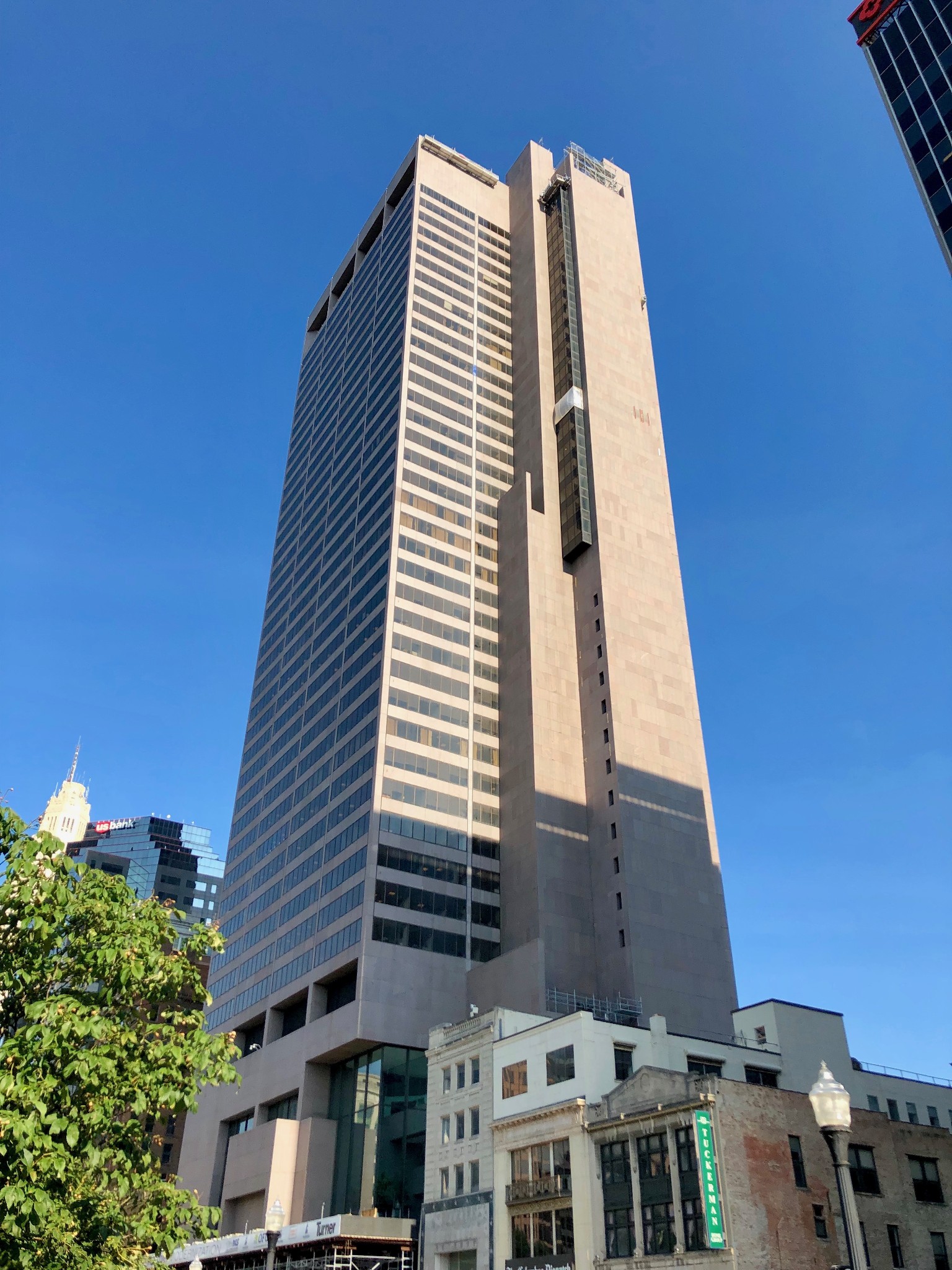
The Rhodes State Office Tower in downtown Columbus houses the Ohio Attorney General's Office.
Credit: w_lemay / Wikimedia Commons Image source https://creativecommons.org/publicdomain/zero/1.0/
Ohio Attorney General D. Andrew Wilson issued formal Opinion No. 2026-013 on Nov. 20, 2026, advising that a board of county commissioners must appropriate the amount requested by a county veterans service commission and levy taxes up to one-half mill for that purpose. The opinion was issued at the request of Greene County Prosecuting Attorney David D. Hayes concerning county commissioners' responsibilities to fund a veterans service commission under R.C. 5901.11. Formal opinions from the attorney general provide statewide legal guidance to public officials and county prosecutors interpreting Ohio statutes.
Five Legal Questions
To streamline the analysis, the attorney general reframed the questions concerning the board of county commissioners’ responsibilities to fund a county veterans service commission. The first two questions ask how much funding county commissioners must appropriate to fulfill a commission's request under R.C. 5901.11, and whether that levy forms part of the county's existing inside millage or requires a separate special levy. The remaining questions ask whether levy proceeds and appropriations should be deposited into the county general fund or a separate fund, what happens to unspent appropriations at the end of a fiscal year, and whether a commission may maintain a reserve balance for future needs.
Formal Three-Point Syllabus
The formal syllabus of Opinion No. 2026-013 sets forth three legal conclusions:
Under the first syllabus point, the opinion states: "R.C. 5901.11 authorizes a veterans service commission to request and receive “the probable amount [of money] necessary” for its services from the board of county commissioners." The syllabus adds: "The board must appropriate the actual amount requested by the veterans service commission and levy taxes up to one-half mill for that purpose on the county’s taxable property. (1991 Ohio Atty.Gen.Ops. No. 91-008 overruled on the basis of statutory amendments)."
Under the second syllabus point, the opinion states: "The veterans service commission’s share of tax levy revenue under R.C. 5901.11 is derived from within the 10 mills of “inside millage” that may be levied without a vote of the electorate."
Under the third syllabus point, the opinion states: "Tax levy revenue generated under R.C. 5901.11 must be paid into the county’s general fund." The syllabus adds: "Unused and unencumbered funds from appropriations to the veterans service commission lapse at the end of the fiscal year and revert to the county’s general fund."
Statutory Amendments and Precedent
Under the legislative history of the statute, prior to 1988, R.C. 5901.11 did not permit the board of county commissioners to revise a veterans service commission's budget request by reducing the requested amount. In 1988, the General Assembly amended the statute to grant county commissioners authority to revise budget requests when making appropriations. Prior to the statutory change in 1994, an attorney general opinion concluded that county commissioners did have discretion to revise a VSC’s budget request.
The General Assembly amended the law again in 1994, explicitly removing the county commissioners' authority to revise the funding request. In its 1997 decision in Lynch v. Gallia County Board of Commissioners, the Supreme Court of Ohio held that the statute imposes a mandatory duty upon county commissioners to fund a lawful budget request up to the statutory cap of five-tenths of a mill on assessed property valuation. Wilson's opinion formally overrules the 1991 guidance because lawmakers eliminated board discretion.
Inside Millage Mechanics
The tax levy to fund a veterans service commission is part of the county's inside millage and not a separate, additional levy. The opinion notes that "Article XII, Section 2 of the Ohio Constitution allows property to be subjected to a rate of ten mills without voter approval, also known as inside millage." In Greene County, county government receives 2.5 of the 10 mills of inside millage.
In sum, the necessary levy in R.C. 5901.11 to support the commission is raised through the county's existing general levy of inside millage for current expenses. Based on the plain text of the statute, however, the board is not obligated to levy the full five tenths of a mill if a smaller levy would produce the revenue requested by the VSC. If the VSC requires additional funds after the board adopts its annual budget, R.C. 5705.40 authorizes the board to amend or supplement the appropriation.
General Fund Deposit and Prohibition on Reserve Balances
Under R.C. 5705.10(A), revenue from the general levy must be paid into the county general fund. Despite its name, the county general fund includes money that is restricted to use for limited purposes, and under R.C. 5705.10, money paid into any fund shall be used only for the purposes for which such fund is established.
Regarding unused funds, R.C. 5901.11 does not provide authority for the commission to retain unspent appropriations after the end of the fiscal year for which the money was appropriated. Under R.C. 5705.40, unused and unencumbered funds from appropriations expire annually and revert to the county general fund. Funds encumbered for current outstanding obligations, if any, may be retained at the end of the county's fiscal year until properly paid out.
How we know this
The sources and records behind this story, with the facts they support.
Correction to brief and AG opinions-list summary, captured Nov. 20, 2026, ~4:56 p.m. ET
Supporting evidence (1)
Ohio Attorney General D. Andrew Wilson issued formal Opinion No. 2026-013 on Nov. 20, 2026, advising that a board of county commissioners must appropriate the amount requested by a county veterans service commission and levy taxes up to one-half mill for that purpose.
Read supporting passage
Identify him only as Ohio Attorney General D. Andrew Wilson, as the opinion's signature block does.
Supporting evidence (6)
Ohio Attorney General D. Andrew Wilson issued formal Opinion No. 2026-013 on Nov. 20, 2026, advising that a board of county commissioners must appropriate the amount requested by a county veterans service commission and levy taxes up to one-half mill for that purpose.
Read supporting passage
November 20, 2026 The Honorable David D. Hayes Greene County Prosecuting Attorney 61 Greene Street, Suite 200, Second Floor Xenia, Ohio 45385 SYLLABUS: 2026-013 1. R.C. 5901.11 authorizes a veterans service com- mission to request and receive “the probable amount [of money] necessary” for its services from the board of county commissioners. The board must appropriate the actual amount re- quested by the veterans service commission and levy taxes up to one-half mill for that purpose on the county’s taxable property.
Under the first syllabus point, the opinion states: "R.C. 5901.11 authorizes a veterans service commission to request and receive “the probable amount [of money] necessary” for its services from the board of county commissioners."
Read supporting passage
1. R.C. 5901.11 authorizes a veterans service com- mission to request and receive “the probable amount [of money] necessary” for its services from the board of county commissioners.
The syllabus adds: "The board must appropriate the actual amount requested by the veterans service commission and levy taxes up to one-half mill for that purpose on the county’s taxable property. (1991 Ohio Atty.Gen.Ops.
Read supporting passage
The board must appropriate the actual amount re- quested by the veterans service commission and levy taxes up to one-half mill for that purpose on the county’s taxable property. (1991 Ohio Atty.Gen.Ops. No. 91-008 overruled on the basis of statutory amendments).
Under the second syllabus point, the opinion states: "The veterans service commission’s share of tax levy revenue under R.C. 5901.11 is derived from within the 10 mills of “inside millage” that may be levied without a vote of the electorate."
Read supporting passage
2. The veterans service commission’s share of tax levy revenue under R.C. 5901.11 is derived from within the 10 mills of “inside millage” that may be levied without a vote of the electorate.
Under the third syllabus point, the opinion states: "Tax levy revenue generated under R.C. 5901.11 must be paid into the county’s general fund."
Read supporting passage
3. Tax levy revenue generated under R.C. 5901.11 must be paid into the county’s general fund.
The syllabus adds: "Unused and unencumbered funds from appropriations to the veterans service commission lapse at the end of the fiscal year and revert to the county’s general fund."
Read supporting passage
Unused and unencumbered funds from appro- priations to the veterans service commission lapse at the end of the fiscal year and revert to the county’s general fund.
Supporting evidence (3)
The opinion was issued at the request of Greene County Prosecuting Attorney David D. Hayes concerning county commissioners' responsibilities to fund a veterans service commission under R.C. 5901.11.
Read supporting passage
OPINION NO. 2026-013 The Honorable David D. Hayes Greene County Prosecuting Attorney 61 Greene Street, Suite 200, Second Floor Xenia, Ohio 45385 Dear Prosecutor Hayes: You have requested an opinion concerning the board of county commissioners’ responsibilities to fund a county veterans service commission (VSC). To streamline the analysis, I have reframed your questions as follows: 1. Under R.C. 5901.11, how much funding must a board of county commissioners appropriate to fulfill a VSC’s request for funds?
To streamline the analysis, the attorney general reframed the questions concerning the board of county commissioners’ responsibilities to fund a county veterans service commission.
Read supporting passage
You have requested an opinion concerning the board of county commissioners’ responsibilities to fund a county veterans service commission (VSC). To streamline the analysis, I have reframed your questions as follows:
The first two questions ask how much funding county commissioners must appropriate to fulfill a commission's request under R.C. 5901.11, and whether that levy forms part of the county's existing inside millage or requires a separate special levy.
Read supporting passage
1. Under R.C. 5901.11, how much funding must a board of county commissioners appropriate to fulfill a VSC’s request for funds? 2. Is the referenced levy under R.C. 5901.11 part of the county’s existing “inside millage” raised through the general levy, or does the board have to impose a separate, special levy?
Supporting evidence (1)
The remaining questions ask whether levy proceeds and appropriations should be deposited into the county general fund or a separate fund, what happens to unspent appropriations at the end of a fiscal year, and whether a commission may maintain a reserve balance for future needs.
Read supporting passage
3. Should the VSC’s appropriation and levy pro- ceeds under R.C. 5901.11 be deposited in the county’s general fund or in a separate fund? 4. What becomes of any unspent appropriation to the VSC at the end of a fiscal year? 5. May the VSC maintain a reserve balance for fu- ture needs?
Supporting evidence (3)
Under the legislative history of the statute, prior to 1988, R.C. 5901.11 did not permit the board of county commissioners to revise a veterans service commission's budget request by reducing the requested amount.
Read supporting passage
The legislative history of R.C. 5901.11 sheds light on the present statutory requirements as those require- ments have changed from time to time. Prior to 1988, R.C. 5901.11 did not permit the board of county com- missioners to revise the VSC’s budget request by re- ducing the requested amount.
In 1988, the General Assembly amended the statute to grant county commissioners authority to revise budget requests when making appropriations.
Read supporting passage
However, the General As- sembly amended the statute in 1988 and granted au- thority for a county commissioner’s board to revise a VSC budget request in making appropriations.
The General Assembly amended the law again in 1994, explicitly removing the county commissioners' authority to revise the funding request.
Read supporting passage
The statute was again amended in 1994 and, this time, the amendment removed the county commissioner’s au- thority to revise the VSC’s funding request.
Supporting evidence (2)
Prior to the statutory change in 1994, an attorney general opinion concluded that county commissioners did have discretion to revise a VSC’s budget request.
Read supporting passage
Thus in 1991, prior to the statutory change in 1994 and prior to Lynch, 1991 Ohio Atty.Gen.Ops. No. 91-008 concluded that county commissioners did have discretion to revise a VSC’s budget request.
Wilson's opinion formally overrules the 1991 guidance because lawmakers eliminated board discretion.
Read supporting passage
In light of the 1994 leg- islative amendment to R.C. 5901.11 removing the board of county commissioners’ discretion to revise a VSC budget request, I must now overrule 1991 Ohio Atty.Gen.Ops. No. 91-008.
Supporting evidence (2)
Gallia County Board of Commissioners, the Supreme Court of Ohio held that the statute imposes a mandatory duty upon county commissioners to fund a lawful budget request up to the statutory cap of five-tenths of a mill on assessed property valuation.
Read supporting passage
Lynch v. Gallia County Board of Commissioners, which held that “R.C. 5901.11 imposes a mandatory duty upon the board of county commis- sioners to fund a lawful budget request of a veterans service commission up to the five-tenths mill limitation set forth in the statute.”
Based on the plain text of the statute, however, the board is not obligated to levy the full five tenths of a mill if a smaller levy would produce the revenue requested by the VSC.
Read supporting passage
Based on the plain text of the statute, however, the board is not obligated to levy the full five tenths of a mill if a smaller levy would produce the rev- enue requested by the VSC.
Supporting evidence (2)
The tax levy to fund a veterans service commission is part of the county's inside millage and not a separate, additional levy.
Read supporting passage
This levy is part of the county’s inside millage and not a separate, additional levy. Inside millage is not sub- ject to voter approval.
The opinion notes that "Article XII, Section 2 of the Ohio Constitution allows property to be subjected to a rate of ten mills without voter approval, also known as inside millage."
Read supporting passage
Article XII, Section 2 of the Ohio Constitution allows property to be subjected to a rate of ten mills without voter approval, also known as inside millage.
Supporting evidence (2)
In Greene County, county government receives 2.5 of the 10 mills of inside millage.
Read supporting passage
You have advised that Greene County receives 2.5 of the 10 mills of inside millage.
If the VSC requires additional funds after the board adopts its annual budget, R.C. 5705.40 authorizes the board to amend or supplement the appropriation.
Read supporting passage
If the VSC requires additional funds after the board adopts its an- nual budget, R.C. 5705.40 authorizes the board to amend or supplement the appropriation.
Supporting evidence (4)
In sum, the necessary levy in R.C. 5901.11 to support the commission is raised through the county's existing general levy of inside millage for current expenses.
Read supporting passage
In sum, the “necessary levy” in R.C. 5901.11 to support the Greene County VSC is raised through the county’s existing general levy of inside millage for current expenses.
Under R.C. 5705.10(A), revenue from the general levy must be paid into the county general fund.
Read supporting passage
Revenue from the general levy must be paid into the county’s general fund. R.C. 5705.10(A); 2008 Ohio Atty.Gen.Ops. No. 2008-033, at 2-341;
Despite its name, the county general fund includes money that is restricted to use for limited purposes, and under R.C. 5705.10, money paid into any fund shall be used only for the purposes for which such fund is established.
Read supporting passage
Despite its name, the county general fund includes money that is “restricted to use for limited purposes,” and under R.C. 5705.10, “[m]oney paid into any fund shall be used only for the purposes for which such fund is established.”
Regarding unused funds, R.C. 5901.11 does not provide authority for the commission to retain unspent appropriations after the end of the fiscal year for which the money was appropriated.
Read supporting passage
R.C. 5901.11 does not provide authority for the VSC to retain unspent appropriations after the end of the fis- cal year for which the money was appropriated.
Supporting evidence (2)
Under R.C. 5705.40, unused and unencumbered funds from appropriations expire annually and revert to the county general fund.
Read supporting passage
Pursu- ant to R.C. 5705.40, unused and unencumbered funds from appropriations lapse at the end of the fiscal year and revert to the county’s general fund.
Funds encumbered for current outstanding obligations, if any, may be retained at the end of the county's fiscal year until properly paid out.
Read supporting passage
Funds encum- bered for current outstanding obligations, if any, may be retained in the VSC’s fund at the end of the county’s fiscal year until properly paid out.