
Columbus City Council Delays Utility Reselling Rules to Dec. 31, 2027
Emergency legislation passed under consent status extends the compliance deadline to Dec. 31, 2027, preventing penalties under city utility reselling rules.
Columbus City Council approved emergency legislation extending the compliance deadline for residential utility reselling rules to Dec. 31, 2027. The legislation extends the compliance deadline from one year to two years from the effective date of the ordinance, making the new compliance deadline Dec. 31, 2027.
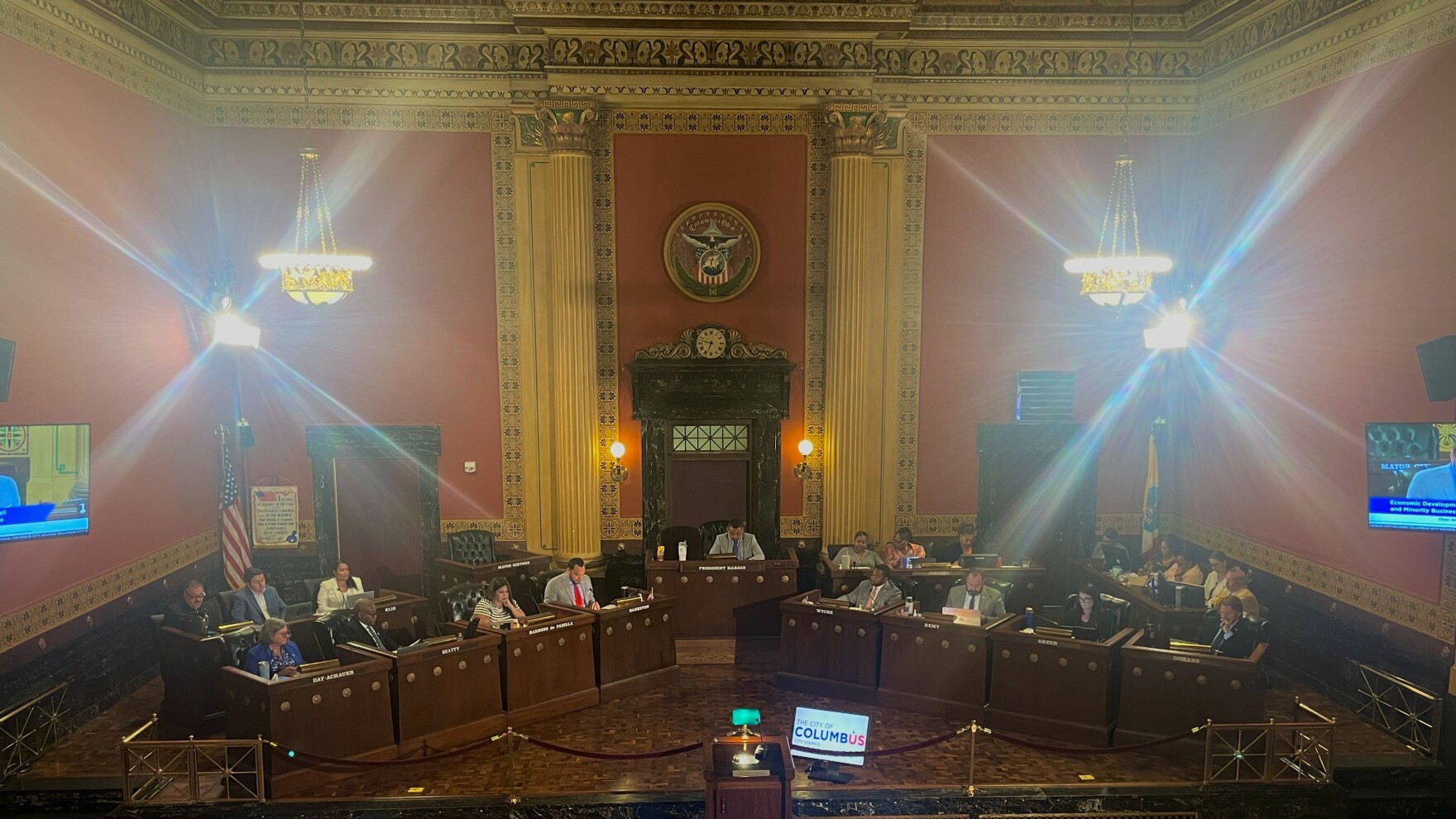
Columbus City Council members convene in formal session inside the City Council Chambers at Columbus City Hall.
Credit: WOSU Public Media Image source
Council approved the measure under an emergency declaration specifically to prevent penalties from being assessed under the previous deadline. According to city legislation records, officials determined after the initial ordinance passed that more time was needed to clarify provisions and give affected entities additional time to comply.
City legislation records list the ordinance with consent status. Consent items are approved collectively without separate floor debate.
The extended deadline applies to Chapter 4553 of the Columbus City Codes, which was enacted to regulate utility reselling for residential properties across the city. In many rental communities, tenants do not receive accounts directly from utility providers, and landlords instead receive master bills before adding fees and charges to residents' payment statements.
Columbus City Council voted unanimously to pass regulations capping fees that landlords pass on to tenants who are not directly billed for utility services. City council records show the original utility reselling regulations were enacted in December 2025. Under that ordinance, administrative fees from landlords are capped at $8 while requiring greater transparency in billing statements. The regulations also ban landlords from charging tenants more than what their utility bills actually cost.
Councilmember Christopher Wyche, who sponsored the regulations, stated that the policy was designed to lead to greater enrollment in the city's utility assistance program, noting that residents previously faced barriers if billed by a landlord rather than directly by a utility company. The tenant protections were originally expected to take effect over the course of a one-year rollout.
Under the amended ordinance, all applicable entities must be in compliance with the code section by Dec. 31, 2027.
Video Watch video 0:33
How we know this
The sources and records behind this story, with the facts they support.
Supporting evidence (8)
Columbus City Council approved emergency legislation extending the compliance deadline for residential utility reselling rules to Dec. 31, 2027.
Read supporting passage
3244-2026 · To amend Ordinance No. 3554-2025, passed by Columbus City Council on December 10, 2025, to extend the compliance deadline by one (1) year to December 31st, 2027; and to declare an emergency. ($0.00)
Columbus City Council approved emergency legislation extending the compliance deadline for residential utility reselling rules to Dec. 31, 2027.
Read supporting passage
regulated the practice of utility reselling for residential properties in the City of Columbus.
The legislation extends the compliance deadline from one year to two years from the effective date of the ordinance, making the new compliance deadline Dec. 31, 2027.
Read supporting passage
This ordinance extends the compliance deadline from one (1) year to two (2) years from the effective date of the ordinance, making the new compliance deadline December 31st, 2027.
Council approved the measure under an emergency declaration specifically to prevent penalties from being assessed under the previous deadline.
Read supporting passage
Emergency Justification: Emergency action is requested in order to prevent penalties from being assessed to the applicable entities under the current compliance deadline.
According to city legislation records, officials determined after the initial ordinance passed that more time was needed to clarify provisions and give affected entities additional time to comply.
Read supporting passage
After ordinance passage it was determined that more time was needed to allow for further time to clarify provisions and to allow the applicable entities affected by this ordinance additional time for compliance.
The extended deadline applies to Chapter 4553 of the Columbus City Codes, which was enacted to regulate utility reselling for residential properties across the city.
Read supporting passage
amended Title 45 of the Columbus City Codes by enacting a new Chapter 4553 and regulated the practice of utility reselling for residential properties in the City of Columbus.
City council records show the original utility reselling regulations were enacted in December 2025.
Read supporting passage
Ordinance No. 3554-2025, passed by Columbus City Council on December 10, 2025, which amended Title 45 of the Columbus City Codes by enacting a new Chapter 4553 and regulated the practice of utility reselling for residential properties in the City of Columbus.
Under the amended ordinance, all applicable entities must be in compliance with the code section by Dec. 31, 2027.
Read supporting passage
SECTION 2. All applicable entities must be in compliance with this code section within 1 year of the ordinance effective date by December 31st, 2027.
Supporting evidence (1)
City legislation records list the ordinance with consent status.
Read supporting passage
{Body=Public Utilities & Sustainability Committee, Content type=Legislation, Document coverage=API text and document metadata; linked PDF bytes are not retained, File=3244-2026, Legislation type=Ordinance, Municipality=columbus, Status=Consent, Text version=1}
Supporting evidence (6)
In many rental communities, tenants do not receive accounts directly from utility providers, and landlords instead receive master bills before adding fees and charges to residents' payment statements.
Read supporting passage
Many tenants are not directly billed by the utility provider. Rather, the utility bills are sent to the landlord. Then the landlord often adds fees and charges when sending tenants the total they are required to pay.
Columbus City Council voted unanimously to pass regulations capping fees that landlords pass on to tenants who are not directly billed for utility services.
Read supporting passage
Columbus City Council voted unanimously on Monday to pass regulations that would cap fees landlords pass on to tenants who are not directly billed for utility services.
Under that ordinance, administrative fees from landlords are capped at $8 while requiring greater transparency in billing statements.
Read supporting passage
The measure, sponsored by Councilmember Christopher Wyche, will cap administrative fees from landlords at $8 while requiring greater transparency in residents' bills.
The regulations also ban landlords from charging tenants more than what their utility bills actually cost.
Read supporting passage
Furthermore, the measure bans landlords from charging residents more than what their utility bills actually cost.
Councilmember Christopher Wyche, who sponsored the regulations, stated that the policy was designed to lead to greater enrollment in the city's utility assistance program, noting that residents previously faced barriers if billed by a landlord rather than directly by a utility company.
Read supporting passage
Wyche said he hopes these changes will lead to greater enrollment in the city's utility assistance program. Previously, residents could only get utility assistance if they were billed directly from the utility company, and rarely if they were billed instead by their landlord.
The tenant protections were originally expected to take effect over the course of a one-year rollout.
Read supporting passage
These changes are expected to go into effect over the next year.