Columbus Proposes $2M Taxpayer Grant for Downtown Services After SID Dissolution
Ordinance 2538-2026 shifts downtown safety and cleaning from commercial property assessments to public tax dollars amid service cuts and lapsed vendor status.
Columbus City Council is scheduled on its Oct. 5 agenda to consider legislation authorizing a $2 million municipal grant to the Columbus Downtown Development Corporation to take over safety, street cleaning, and homeless outreach services previously operated by downtown property owners.
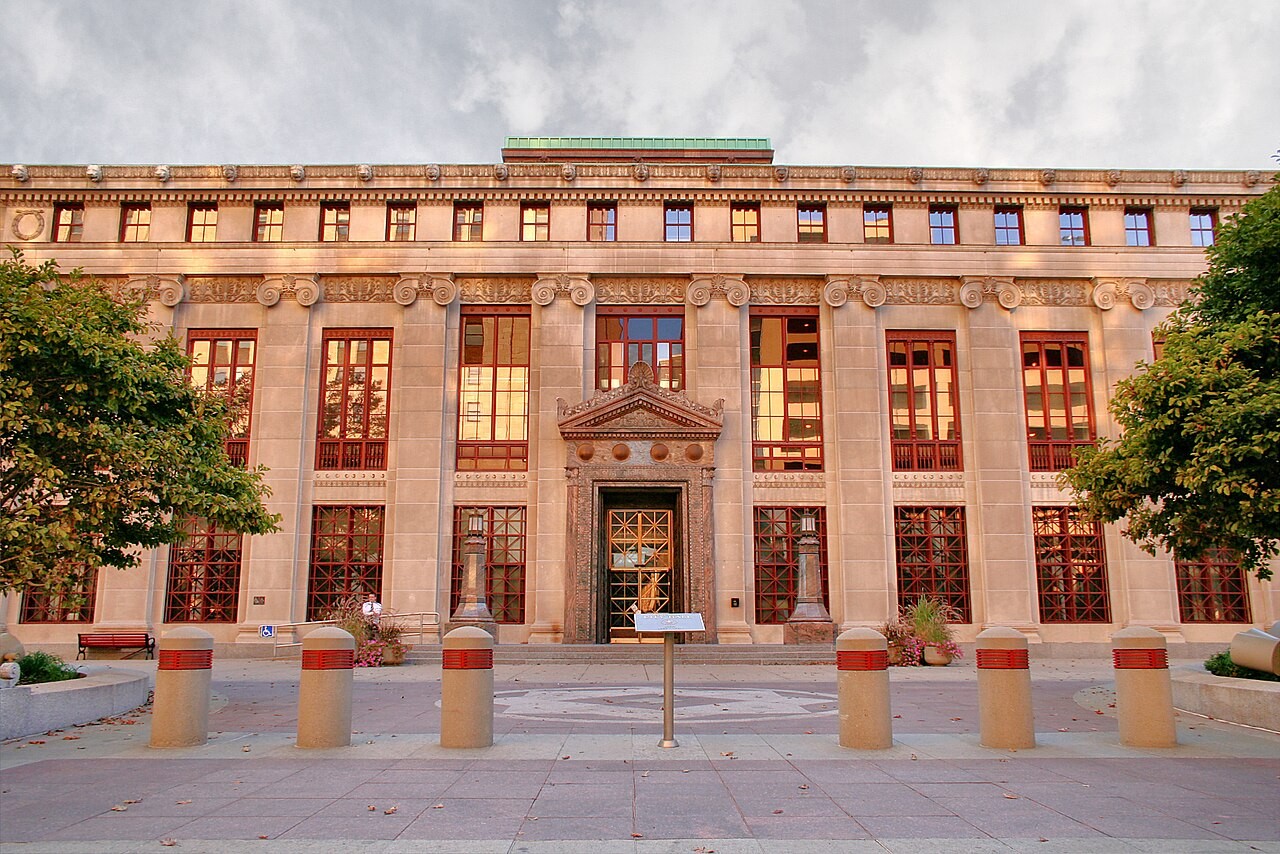
Under Ordinance 2538-2026, the city would enter into an agreement with the private nonprofit development corporation, allowing municipal funds to be advanced on a predetermined schedule to continue work previously handled by downtown Special Improvement Districts. The proposed transfer marks a structural departure in how downtown services are financed, replacing self-taxing commercial assessments with municipal subsidies following the dissolution of the Capital Crossroads and Discovery District SIDs.
The measure also advances despite a municipal compliance lapse: city legislative records note that the development corporation's vendor compliance status expired on July 8, 2026.
Financial Breakdown of the $2 Million Grant
The legislation establishes a $2 million funding package drawn across two distinct municipal accounts.
The primary share consists of $1,500,000 from the General Fund, appropriated through the Economic Development division in Fund 1000, Dept-Div 44-02, object class 05. To accommodate the expenditure, council must authorize an internal transfer of appropriation between divisions of up to $675,900.
The remaining $500,000 is drawn from the Housing Business Tax Incentive fund, designated under Fund 2229, Dept-Div 44-10, object class 05. The ordinance authorizes the city auditor to execute necessary accounting codes and funding source adjustments, permitting funds to be paid out ahead of work rather than purely through reimbursement.
The legislation states that the organization's vendor compliance status expired months ago, adding that the entity "will be contract compliant prior to passage of this ordinance." However, the text of the ordinance establishes no specific operational performance targets, public service standards, or dedicated reporting mandates tied to the public money.
The Push and Defunding Behind the SIDs' Dissolution
For more than two decades, supplemental sanitation, safety patrols, and social service outreach across downtown Columbus were financed directly by private commercial property owners through special assessments approved every five years. That framework unraveled after municipal and regional leaders initiated a push to fold the independent districts into Downtown Columbus Inc. (DCI), the parent entity aligned with the development corporation.
Tensions erupted in May 2024 when Columbus Director of Development Michael Stevens and then-Experience Columbus Director of Strategic Visioning Robin Davis presented SID leadership with a directive that the districts would become a subsidiary of DCI by the end of the year. When SID directors pushed for an open process and requested an independent facilitator to guide merger talks, city and tourism partners refused further working group meetings.
Institutional leverage quickly followed. The City of Columbus eliminated its $190,000 annual SID contribution, while the Central Ohio Transit Authority pulled its $100,000 annual funding. Simultaneously, commercial real estate developers holding high-assessed-value properties applied pressure from the inside.
Large property owners refused to sign renewal petitions without a merger, while smaller downtown owners expressed concern that opposing City Hall could jeopardize future city development grants, according to statements made to the board by SID Deputy Director Lisa Defendiefer. When the Capital Crossroads board attempted to salvage operations by voting to downsize its boundaries, three board members representing major developers—Nationwide Realty Investors, Continental Real Estate, and the Edwards Companies—voted against the measure.
Unable to secure the statutory 60% property-owner petition threshold under the assessed-value rules, the Capital Crossroads and Discovery SIDs formally ceased operations on Nov. 1, 2025.
Assessment Pause and Service Reductions
With the formal districts gone, downtown Columbus entered 2026 without a special assessment on private properties. Instead, DCI introduced an interim "Safer Downtown" bridge initiative, funded by operating reserves, voluntary owner contributions, and municipal funds, while promising that service levels would "remain the same or improve."
In practice, operational field reports have documented visible service reductions across downtown. Ambassador staffing under the bridge initiative dropped to approximately 70% of pre-dissolution levels, causing geographic coverage to contract. While core high-traffic areas retained regular ambassador patrols, peripheral blocks were reduced to weekly visits rather than daily service, allowing litter and maintenance issues to compound.
Capital improvements have stopped altogether. While the independent SIDs regularly financed streetscape maintenance, public lighting upgrades, seasonal decor, and furniture replacement, those capital cycles were halted under bridge funding, creating mounting deferred maintenance.
The shift also altered governance dynamics. Under the original assessment model, assessed property owners held formal budget standing and negotiating power with city officials. Operating on voluntary bridge funds and public grants, the private development corporation lacks that statutory constituency mechanism, weakening downtown stakeholders' direct budget leverage.
What Stakeholders and Taxpayers Face Next
As City Council prepares to vote on the $2 million grant, downtown property owners and taxpayers face a transformed downtown operating model.
DCI has announced plans to circulate a petition in Fall 2026 to re-establish a downtown district beginning in 2027. Under that proposal, governance would be consolidated directly under DCI rather than overseen by an independent board. Organizers are also revising the assessment weighting formula in an effort to prevent a small coalition of large property owners from blocking future renewals.
Whether downtown property owners will agree to a reconstituted assessment under centralized development authority remains unsettled. In the interim, Ordinance 2538-2026 requires general taxpayers and housing tax funds to underwrite downtown sanitation and safety patrols that commercial landlords financed themselves for a quarter-century.
How we know this
The sources and records behind this story, with the facts they support.
Supporting evidence (6)
Under Ordinance 2538-2026, the city would enter into an agreement with the private nonprofit development corporation, allowing municipal funds to be advanced on a predetermined schedule to continue work previously handled by downtown Special Improvement Districts.
Read supporting passage
To authorize the Director of Development to enter into a grant agreement with Columbus Downtown Development Corporation in an amount up to $2,000,000.00; to authorize the transfer of appropriation between divisions in the amount up to $675,900.00 and the expenditure in an amount up to $1,500,000.00 within the General Fund; to authorize the appropriation and expenditure in an amount up to $500,000.00 within the Housing Business Tax Incentive fund; to allow for advancement of grant funds on a predetermined schedule.
Under Ordinance 2538-2026, the city would enter into an agreement with the private nonprofit development corporation, allowing municipal funds to be advanced on a predetermined schedule to continue work previously handled by downtown Special Improvement Districts.
Read supporting passage
for the purposes of continuing the work previously performed by the downtown Special Improvement Districts (SIDs) who provided additional safety and cleanliness activities and other services which benefit downtown workers, residents and businesses, and provided homeless outreach.
The measure also advances despite a municipal compliance lapse: city legislative records note that the development corporation's vendor compliance status expired on July 8, 2026.
Read supporting passage
Columbus Downtown Development Corporation’s vendor number is 010217 and expired on 07/08/2026 but will be contract compliant prior to passage of this ordinance.
The primary share consists of $1,500,000 from the General Fund, appropriated through the Economic Development division in Fund 1000, Dept-Div 44-02, object class 05.
Read supporting passage
To authorize the Director of Development to enter into a grant agreement with Columbus Downtown Development Corporation in an amount up to $2,000,000.00; to authorize the transfer of appropriation between divisions in the amount up to $675,900.00 and the expenditure in an amount up to $1,500,000.00 within the General Fund; to authorize the appropriation and expenditure in an amount up to $500,000.00 within the Housing Business Tax Incentive fund; to allow for advancement of grant funds on a predetermined schedule.
The primary share consists of $1,500,000 from the General Fund, appropriated through the Economic Development division in Fund 1000, Dept-Div 44-02, object class 05.
Read supporting passage
within Fund 1000 (General Fund), Dept-Div 44-02 (Economic Development), in object class 05 (Other)
The remaining $500,000 is drawn from the Housing Business Tax Incentive fund, designated under Fund 2229, Dept-Div 44-10, object class 05.
Read supporting passage
within Fund 2229 (Housing Business Tax Fund), Dept-Div 44-10 (Housing), in object class 05 (Other)
Supporting evidence (1)
For more than two decades, supplemental sanitation, safety patrols, and social service outreach across downtown Columbus were financed directly by private commercial property owners through special assessments approved every five years.
Read supporting passage
Capital Crossroads and Discovery Special Improvement Districts were created by property owners in Downtown Columbus to provide services that support a safe, clean, vibrant, and welcoming downtown. Property owners in each special improvement district (SID) fund the program through assessments, and the board of trustees determines the focus.
https://columbusunderground.com/special-improvement-districts-vote-to-downsize-after-defunding-we1/
Supporting evidence (6)
Tensions erupted in May 2024 when Columbus Director of Development Michael Stevens and then-Experience Columbus Director of Strategic Visioning Robin Davis presented SID leadership with a directive that the districts would become a subsidiary of DCI by the end of the year.
Read supporting passage
“We were given a directive at that initial meeting on May 13, 2024, and we were told that we were going to be a subsidiary of DCI, and that it was a done deal, and that was going to happen by the end of 2024,” explained Marc Conte, Executive Director of both SIDs
When SID directors pushed for an open process and requested an independent facilitator to guide merger talks, city and tourism partners refused further working group meetings.
Read supporting passage
After this disastrous meeting, the other parties would not agree to hold another one, because we were requiring that we have an independent facilitator so that we could honor what our board was saying, which was that we need a more open and collaborative process.
The City of Columbus eliminated its $190,000 annual SID contribution, while the Central Ohio Transit Authority pulled its $100,000 annual funding.
Read supporting passage
“COTA has said that they are not going to commit their $100,000 contribution every year, and the City has said they’re not going to contribute their $190,000.”
Large property owners refused to sign renewal petitions without a merger, while smaller downtown owners expressed concern that opposing City Hall could jeopardize future city development grants, according to statements made to the board by SID Deputy Director Lisa Defendiefer.
Read supporting passage
“We have quite a few property owners, all large property owners, who basically refused to sign the petition, because there’s no merger,” said Conte.
Large property owners refused to sign renewal petitions without a merger, while smaller downtown owners expressed concern that opposing City Hall could jeopardize future city development grants, according to statements made to the board by SID Deputy Director Lisa Defendiefer.
Read supporting passage
“They felt like they were beholden to the city because they could get grant money potentially down the road, and they didn’t want to look like they’re making waves and supporting the SID over supporting the city, so to speak,”
When the Capital Crossroads board attempted to salvage operations by voting to downsize its boundaries, three board members representing major developers—Nationwide Realty Investors, Continental Real Estate, and the Edwards Companies—voted against the measure.
Read supporting passage
The three no votes came from board members Chris Matousek with Nationwide Realty Investors, Tony Mathena with Continental Real Estate, and Kim Ulle with the Edwards Companies.
https://platstreet.com/block-ops/columbus-sid-year-one
Supporting evidence (7)
Unable to secure the statutory 60% property-owner petition threshold under the assessed-value rules, the Capital Crossroads and Discovery SIDs formally ceased operations on Nov. 1, 2025.
Read supporting passage
On November 1, 2025, the Capital Crossroads and Discovery District Special Improvement Districts in downtown Columbus ceased formal operations after a governance dispute that had been building for several years.
Ambassador staffing under the bridge initiative dropped to approximately 70% of pre-dissolution levels, causing geographic coverage to contract.
Read supporting passage
Staffing is running at approximately 70% of the pre-dissolution level.
While core high-traffic areas retained regular ambassador patrols, peripheral blocks were reduced to weekly visits rather than daily service, allowing litter and maintenance issues to compound.
Read supporting passage
The geographic contraction of coverage is the first operational consequence of the absence. The former SID boundary covered a defined territory. The bridge program covers a smaller territory, and the blocks outside the concentrated zone are receiving less frequent service than they received under the SID.
While the independent SIDs regularly financed streetscape maintenance, public lighting upgrades, seasonal decor, and furniture replacement, those capital cycles were halted under bridge funding, creating mounting deferred maintenance.
Read supporting passage
Capital improvements have stopped entirely. The SID's capital capacity — which funded annual streetscape maintenance, lighting upgrades, seasonal decoration programs, and public space furniture replacement — is not replicable from DCI's operating reserves.
Operating on voluntary bridge funds and public grants, the private development corporation lacks that statutory constituency mechanism, weakening downtown stakeholders' direct budget leverage.
Read supporting passage
An active SID with an assessed property owner base has a specific kind of standing in city budget negotiations. Property owners who are paying a formal SID assessment have a financial stake in the supplemental services the city provides, and a SID representing those property owners has leverage in budget conversations that DCI, operating as a voluntary association on bridge funds, does not have.
Under that proposal, governance would be consolidated directly under DCI rather than overseen by an independent board.
Read supporting passage
The governance of the new district would be consolidated directly under DCI rather than organized as a separate legal entity with its own board.
Organizers are also revising the assessment weighting formula in an effort to prevent a small coalition of large property owners from blocking future renewals.
Read supporting passage
The assessment weighting structure is also under revision.
https://downtowncolumbus.com/sid-transition/
Supporting evidence (1)
Instead, DCI introduced an interim "Safer Downtown" bridge initiative, funded by operating reserves, voluntary owner contributions, and municipal funds, while promising that service levels would "remain the same or improve."
Read supporting passage
Service levels will remain the same or improve.