Grove City Weighs Criminal Penalties for Automated License Plate Reader Misuse
Ordinance C-51-26 would criminalize unauthorized searches, credential sharing, and data leaks from the city's 32-camera network as central Ohio grapples with surveillance misuse.
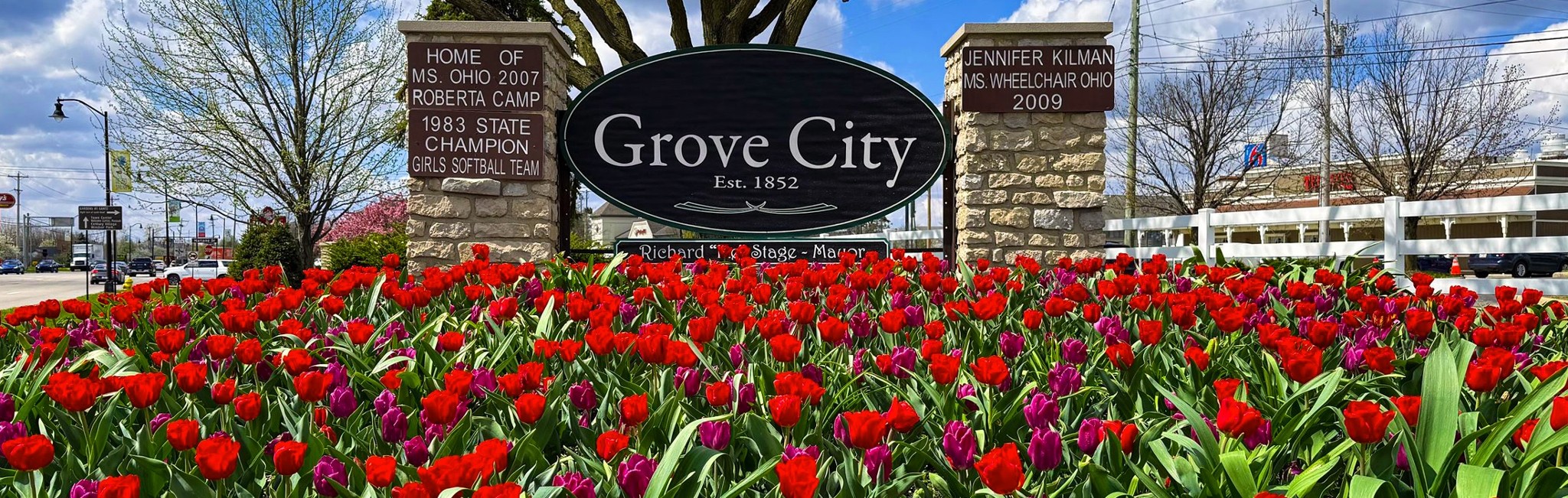
Grove City Council is scheduled to hold a second reading and public hearing on Oct. 5, 2026, on Ordinance C-51-26, a measure that would create municipal criminal penalties for unauthorized use, illicit searches, credential sharing, and data leaks involving automated license plate reader technology.
Originated by Mayor Richard L. Stage and introduced by Council Member Burroughs on Sept. 21, the ordinance enacts Section 525.16 of the Codified Ordinances of the City of Grove City. The legislative preamble declares that automated license plate readers can reveal vehicle movements and that "knowing misuse of such a system or its nonpublic data constitutes a serious breach of public trust and should be subject to criminal penalties."
The measure arrives as municipal surveillance networks face mounting pushback across Franklin County following disclosures of officer misconduct in Columbus and data-sharing suspensions in nearby suburban communities.
Prohibiting Unauthorized Searches and Leaks
Ordinance C-51-26 explicitly names the city's vendor, defining automated license plate reader systems to cover cameras and databases used by or on behalf of the city, including "any system or service provided under the name 'Flock Safety,' and any successor or substantially similar system."
Under the proposed code section, access to license plate cameras and their data is restricted exclusively to legitimate law enforcement operations. The ordinance defines official police business as activities directly tied to criminal investigations, missing persons searches, public safety, or system auditing, while explicitly specifying that "'Official police business' does not include a use motivated by personal curiosity, private benefit, political activity, retaliation, harassment, discrimination, immigration enforcement when prohibited by City policy, or any purpose unrelated to the authorized duties of the user."
The legislation establishes seven specific prohibitions. It bars anyone from knowingly using camera systems or data outside official duties, conducting searches without authorization, or disclosing nonpublic data to outside entities. It also prohibits entering vehicles onto hotlists for unauthorized reasons, sharing user credentials or accounts, and attempting to falsify search justifications or tamper with audit logs.
The criminal sanctions apply broadly beyond sworn personnel. Section 525.16 covers every city official, employee, police officer, contractor, vendor, agent, and task-force participant who is granted system access or custody of nonpublic records.
Department Operations and Auditing Controls
The municipal legislative push builds upon operational policies already governing the 32-camera Flock Safety roadway network operated by the Grove City Division of Police.
Department guidelines state that the cameras record vehicle characteristics and license plates to notify officers of stolen cars and wanted vehicles, but do not use facial recognition or identify individuals, gender, or race. Administrative rules also formally prohibit using the technology for immigration enforcement, routine traffic stops, personal surveillance, or discriminatory tracking.
During an August 17 council briefing, Safety Director Tiefer and Police Chief Scott outlined departmental checks on the technology. Chief Scott stressed that automated cameras serve as an investigative lead generator and "does not replace good police work or officer judgment."
Chief Scott noted that Grove City requires search queries to automatically log an active case number or report ID and that the division conducts quarterly internal audits of search history. Stolen vehicle hits also require human officer verification before enforcement action is taken.
While Grove City retains license plate scan data for 30 days while keeping system access audit logs indefinitely, Chief Scott told council members that vendor discussions about shortening scan retention to seven days could hinder criminal investigations when victims report offenses days after they occur.
Regional Fallout Sparks Local Safeguards
Grove City’s legislative proposal follows a wave of controversy across central Ohio regarding Flock Safety networks and law enforcement data sharing.
In Columbus, Mayor Andrew Ginther announced a pause on police use of Flock cameras in early September 2026 after internal scrutiny revealed an officer had searched the same license plate more than 270 times over 14 months for reasons unrelated to police business. Neighboring Reynoldsburg dropped Flock cameras after discovering officer misuse, while Hilliard instituted a temporary pause.
Worthington City Council followed on Sept. 21 by voting 6-1 to suspend sharing its Flock camera data with outside law enforcement agencies, citing privacy risks and interagency misuse, while directing administrators to negotiate formal regional memorandums of understanding.
Grove City has maintained greater data disclosure than some neighbors during the regional fallout. While Worthington previously denied public records requests for its search logs, Grove City is among the municipalities that released Flock audit logs upon request to reporters.
Oversight Questions for Public Hearing
The Oct. 5 public hearing provides residents and council members their first formal opportunity to evaluate whether municipal criminal penalties offer sufficient protection against surveillance abuse.
Council members and community members are expected to examine how the city’s quarterly audit procedures will detect covert misuse, what procedures govern cooperation with outside regional agencies, and how private commercial cameras that share data with police will be monitored under the new criminal standard. Council is scheduled to take public testimony before deciding whether to enact Section 525.16 into law.
How we know this
The sources and records behind this story, with the facts they support.
Supporting evidence (7)
Grove City Council is scheduled to hold a second reading and public hearing on Oct. 5, 2026, on Ordinance C-51-26, a measure that would create municipal criminal penalties for unauthorized use, illicit searches, credential sharing, and data leaks involving automated license plate reader technology.
Read supporting passage
WHEREAS, the Mayor and City Council finds that knowing misuse of such a system or its nonpublic data constitutes a serious breach of public trust and should be subject to criminal penalties.
Stage and introduced by Council Member Burroughs on Sept. 21, the ordinance enacts Section 525.16 of the Codified Ordinances of the City of Grove City.
Read supporting passage
WHEREAS, the Mayor and City Council finds that knowing misuse of such a system or its nonpublic data constitutes a serious breach of public trust and should be subject to criminal penalties.
The legislative preamble declares that automated license plate readers can reveal vehicle movements and that "knowing misuse of such a system or its nonpublic data constitutes a serious breach of public trust and should be subject to criminal penalties."
Read supporting passage
WHEREAS, the Mayor and City Council finds that knowing misuse of such a system or its nonpublic data constitutes a serious breach of public trust and should be subject to criminal penalties.
Ordinance C-51-26 explicitly names the city's vendor, defining automated license plate reader systems to cover cameras and databases used by or on behalf of the city, including "any system or service provided under the name 'Flock Safety,' and any successor or substantially similar system."
Read supporting passage
WHEREAS, the Mayor and City Council finds that knowing misuse of such a system or its nonpublic data constitutes a serious breach of public trust and should be subject to criminal penalties.
The ordinance defines official police business as activities directly tied to criminal investigations, missing persons searches, public safety, or system auditing, while explicitly specifying that "'Official police business' does not include a use motivated by personal curiosity, private benefit, political activity, retaliation, harassment, discrimination, immigration enforcement when prohibited by City policy, or any purpose unrelated to the authorized duties of the user."
Read supporting passage
WHEREAS, the Mayor and City Council finds that knowing misuse of such a system or its nonpublic data constitutes a serious breach of public trust and should be subject to criminal penalties.
It also prohibits entering vehicles onto hotlists for unauthorized reasons, sharing user credentials or accounts, and attempting to falsify search justifications or tamper with audit logs.
Read supporting passage
WHEREAS, the Mayor and City Council finds that knowing misuse of such a system or its nonpublic data constitutes a serious breach of public trust and should be subject to criminal penalties.
Section 525.16 covers every city official, employee, police officer, contractor, vendor, agent, and task-force participant who is granted system access or custody of nonpublic records.
Read supporting passage
WHEREAS, the Mayor and City Council finds that knowing misuse of such a system or its nonpublic data constitutes a serious breach of public trust and should be subject to criminal penalties.
https://www.grovecityohio.gov/m/newsflash/Archive/Item/154?arcId=638
Supporting evidence (4)
The municipal legislative push builds upon operational policies already governing the 32-camera Flock Safety roadway network operated by the Grove City Division of Police.
Read supporting passage
The Grove City Division of Police uses a 32-camera roadway system, Flock Safety, to aid in preventing and solving crimes.
Department guidelines state that the cameras record vehicle characteristics and license plates to notify officers of stolen cars and wanted vehicles, but do not use facial recognition or identify individuals, gender, or race.
Read supporting passage
The Grove City Division of Police uses a 32-camera roadway system, Flock Safety, to aid in preventing and solving crimes.
Administrative rules also formally prohibit using the technology for immigration enforcement, routine traffic stops, personal surveillance, or discriminatory tracking.
Read supporting passage
The Grove City Division of Police uses a 32-camera roadway system, Flock Safety, to aid in preventing and solving crimes.
While Grove City retains license plate scan data for 30 days while keeping system access audit logs indefinitely, Chief Scott told council members that vendor discussions about shortening scan retention to seven days could hinder criminal investigations when victims report offenses days after they occur.
Read supporting passage
The Grove City Division of Police uses a 32-camera roadway system, Flock Safety, to aid in preventing and solving crimes.
Supporting evidence (4)
During an August 17 council briefing, Safety Director Tiefer and Police Chief Scott outlined departmental checks on the technology.
Read supporting passage
Chief Scott said LPRs provide leads for investigations — stolen vehicles, missing persons and suspects — and "it does not replace good police work or officer judgment."
Chief Scott stressed that automated cameras serve as an investigative lead generator and "does not replace good police work or officer judgment."
Read supporting passage
Chief Scott said LPRs provide leads for investigations — stolen vehicles, missing persons and suspects — and "it does not replace good police work or officer judgment."
Chief Scott noted that Grove City requires search queries to automatically log an active case number or report ID and that the division conducts quarterly internal audits of search history.
Read supporting passage
Chief Scott said LPRs provide leads for investigations — stolen vehicles, missing persons and suspects — and "it does not replace good police work or officer judgment."
While Grove City retains license plate scan data for 30 days while keeping system access audit logs indefinitely, Chief Scott told council members that vendor discussions about shortening scan retention to seven days could hinder criminal investigations when victims report offenses days after they occur.
Read supporting passage
Chief Scott said LPRs provide leads for investigations — stolen vehicles, missing persons and suspects — and "it does not replace good police work or officer judgment."
https://www.yahoo.com/news/politics/articles/worthington-city-council-votes-suspend-090909910.html
Supporting evidence (3)
Neighboring Reynoldsburg dropped Flock cameras after discovering officer misuse, while Hilliard instituted a temporary pause.
Read supporting passage
Columbus paused its Flock cameras and Reynoldsburg dropped the company's cameras after evidence of officers misusing the system was discovered by the cities. Hilliard also recently paused its Flock cameras, but not in response to any misuse, according to the city.
Worthington City Council followed on Sept. 21 by voting 6-1 to suspend sharing its Flock camera data with outside law enforcement agencies, citing privacy risks and interagency misuse, while directing administrators to negotiate formal regional memorandums of understanding.
Read supporting passage
Columbus paused its Flock cameras and Reynoldsburg dropped the company's cameras after evidence of officers misusing the system was discovered by the cities. Hilliard also recently paused its Flock cameras, but not in response to any misuse, according to the city.
While Worthington previously denied public records requests for its search logs, Grove City is among the municipalities that released Flock audit logs upon request to reporters.
Read supporting passage
Columbus paused its Flock cameras and Reynoldsburg dropped the company's cameras after evidence of officers misusing the system was discovered by the cities. Hilliard also recently paused its Flock cameras, but not in response to any misuse, according to the city.