
Fractured Pump at Chillicothe Paper Mill Prompts Warning Over Legacy Chemical Plume
Mill operators warn rising groundwater could release toxic chemicals, while the Ohio EPA says municipal drinking water faces no immediate threat.
A mechanical failure in deep well pumping at the Chillicothe paper mill site has prompted divergent assessments between plant operators and state regulators over an underground chemical plume. On Nov. 12, plant operator U.S. Paper Mill alerted the Ohio Environmental Protection Agency that a decades-old, 90-foot pump inside a critical water containment well had fractured.
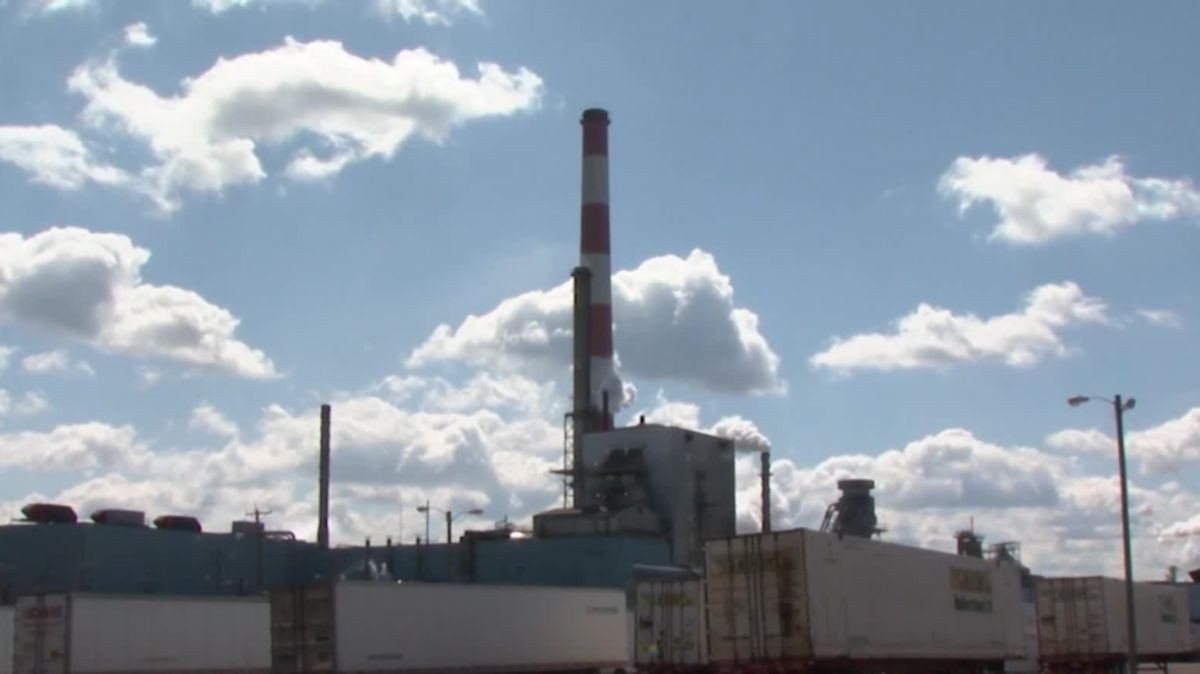
The paper mill complex in Chillicothe, where operators and state regulators are monitoring groundwater containment infrastructure.
Credit: WCMH / Nexstar Media Inc. Image source
U.S. Paper Mill took over well operations after acquiring the closed Pixelle Specialty Solutions plant last year. Past cookware manufacturing at the adjacent WearEver property generated waste containing chlorinated solvents and heavy metals that contaminated local soil and groundwater.
Divergent Warnings Over Plume Risks
U.S. Paper Mill Utility Superintendent Aaron Anders described the fracture as a "potentially urgent situation," warning that without replacing the pump, the water table could potentially rise high enough to release contaminants from the plume. Anders said replacing the broken 90-foot pump will cost hundreds of thousands of dollars. Anders added that residents do not need to be concerned about their water at the moment, stating that the company wanted to provide transparency about the well and plume.
The Ohio EPA offered a contrasting assessment, with a spokesperson stating that there is "no immediate risk of the plume migrating, despite the pump's fracture." The Ohio EPA added that regulators are working with the owner of the WearEver site on plans to increase monitoring for long-term control of the plume.
Hydrological Barrier and Plume History
WearEver Aluminum operated an adjacent cookware manufacturing plant from 1948 until the late 1990s, producing cookware that generated chlorinated solvents and metal waste. The Ohio EPA issued cleanup orders in 1993 and 1999, placing remediation and monitoring responsibility on site owner Howmet Aerospace.
For 30 years, the paper mill's heavy water pumping continually pulled down groundwater levels, preventing the plume from rising to the surface or spreading. Two industrial wells near the WearEver property, designated #17 and #18, historically helped contain the flow of contaminated groundwater. Environmental agency documents show the plume would likely migrate toward local farms and the Scioto River without consistent containment. The plume contains trichloroethylene and vinyl chloride, both linked by federal health researchers to cancer and other serious health complications.
Previously, Pique Media reported plans for the project on Sept. 29, 2026, when U.S. Paper Mill announced steps to restart papermaking at the Chillicothe facility and hire up to 350 workers.
Drinking Water Safeguards in Place
Despite the mechanical breakdown, state and municipal records outline several safeguards protecting public water supplies in Chillicothe and downstream Ross County communities. State records indicate that drinking water in nearby homes is supplied by the Chillicothe municipal water system and is not affected by site contamination. Two residences that directly adjoin the WearEver property to the southeast are connected to city water.
The WearEver property is situated nearly two miles downgradient from the nearest community water system's source water protection area. In addition, the groundwater plume is located more than 1.5 miles from areas designated as potentially impacting public drinking water sources within a five-year timeframe. Additional safeguards on the source parcel include deed restrictions prohibiting potable groundwater use, sub-slab venting systems installed in 2018 to prevent indoor vapor intrusion, and quarterly sampling of monitoring wells.
Video Watch video 0:39
How we know this
The sources and records behind this story, with the facts they support.
https://www.yahoo.com/news/articles/pump-failure-threatens-toxic-plume-211043460.html
Supporting evidence (3)
On Nov. 12, plant operator U.S. Paper Mill alerted the Ohio Environmental Protection Agency that a decades-old, 90-foot pump inside a critical water containment well had fractured.
Read supporting passage
On Nov. 12, the U.S. Paper Mill alerted the Ohio Environmental Protection Agency to a pump fracture on a water well that has been containing a toxic plume of underground chemicals. The decades-old, 90-foot pump will need replaced, which will cost thousands of dollars.
U.S. Paper Mill Utility Superintendent Aaron Anders described the fracture as a "potentially urgent situation," warning that without replacing the pump, the water table could potentially rise high enough to release contaminants from the plume.
Read supporting passage
"As we work closely with the Ohio EPA and the City of Chillicothe, the residents of this community need to understand this is a potentially urgent situation," said U.S. Paper Mill Utility Superintendent Aaron Anders. "Without replacement of the pump, the water table could potentially rise high enough to release contaminants from the plume."
Anders added that residents do not need to be concerned about their water at the moment, stating that the company wanted to provide transparency about the well and plume.
Read supporting passage
Anders said residents do not need to be concerned about their water at the moment, but the company wanted to be transparent about what was happening with the plume and the well.
Supporting evidence (1)
U.S. Paper Mill took over well operations after acquiring the closed Pixelle Specialty Solutions plant last year.
Read supporting passage
U.S. Paper Mill took over the well operation after acquiring the closed Pixelle Specialty Solutions plant last year.
https://www.chillicotheoh.gov/news_detail_T6_R268.php
Supporting evidence (11)
Past cookware manufacturing at the adjacent WearEver property generated waste containing chlorinated solvents and heavy metals that contaminated local soil and groundwater.
Read supporting passage
WearEver Aluminum operated from 1948 until the late 1990s, producing aluminum cookware and other products. Past manufacturing generated waste containing chlorinated solvents (like trichloroethylene or TCE) and lead, cadmium, and other metals. Some of these materials contaminated the soil and groundwater beneath the property.
WearEver Aluminum operated an adjacent cookware manufacturing plant from 1948 until the late 1990s, producing cookware that generated chlorinated solvents and metal waste.
Read supporting passage
WearEver Aluminum operated from 1948 until the late 1990s, producing aluminum cookware and other products. Past manufacturing generated waste containing chlorinated solvents (like trichloroethylene or TCE) and lead, cadmium, and other metals.
The Ohio EPA issued cleanup orders in 1993 and 1999, placing remediation and monitoring responsibility on site owner Howmet Aerospace.
Read supporting passage
Ohio EPA issued orders to clean up the site in 1993 and 1999, including addressing a groundwater plume emanating from the site. The current property owners, Howmet, are responsible for mitigating contamination at the site.
Two industrial wells near the WearEver property, designated #17 and #18, historically helped contain the flow of contaminated groundwater.
Read supporting passage
Two of these wells, #17 and #18, are near the WearEver site and have helped contain the contaminated groundwater plume.
State records indicate that drinking water in nearby homes is supplied by the Chillicothe municipal water system and is not affected by site contamination.
Read supporting passage
Drinking water in nearby homes is provided by the Chillicothe public water system and is not affected by site contamination.
Two residences that directly adjoin the WearEver property to the southeast are connected to city water.
Read supporting passage
Two homes adjoin the WearEver site to the southeast; these homes are connected to and utilize city water.
The WearEver property is situated nearly two miles downgradient from the nearest community water system's source water protection area.
Read supporting passage
The former WearEver site is nearly two miles downgradient from the nearest community water system’s source water protection area.
In addition, the groundwater plume is located more than 1.5 miles from areas designated as potentially impacting public drinking water sources within a five-year timeframe.
Read supporting passage
The groundwater plume is located over 1.5 miles from an area designated as potentially impacting other public drinking water sources within a 5-year timeframe.
Additional safeguards on the source parcel include deed restrictions prohibiting potable groundwater use, sub-slab venting systems installed in 2018 to prevent indoor vapor intrusion, and quarterly sampling of monitoring wells.
Read supporting passage
Deed restrictions for the Howmet/WearEver property prevent the potable use of on-site groundwater.
Additional safeguards on the source parcel include deed restrictions prohibiting potable groundwater use, sub-slab venting systems installed in 2018 to prevent indoor vapor intrusion, and quarterly sampling of monitoring wells.
Read supporting passage
Howmet installed sub-slab venting systems in 2018 to prevent vapors from entering buildings.
Additional safeguards on the source parcel include deed restrictions prohibiting potable groundwater use, sub-slab venting systems installed in 2018 to prevent indoor vapor intrusion, and quarterly sampling of monitoring wells.
Read supporting passage
Groundwater monitoring wells are sampled quarterly.
Supporting evidence (6)
Anders said replacing the broken 90-foot pump will cost hundreds of thousands of dollars.
Read supporting passage
Anders said the decades-old, 90-foot pump protecting residents from the spread of the plume is broken, and will require a replacement with a price tag of hundreds of thousands of dollars.
The Ohio EPA offered a contrasting assessment, with a spokesperson stating that there is "no immediate risk of the plume migrating, despite the pump's fracture."
Read supporting passage
"There is no immediate risk of the plume migrating, despite the pump's fracture," an Ohio EPA spokesperson said in a statement.
The Ohio EPA added that regulators are working with the owner of the WearEver site on plans to increase monitoring for long-term control of the plume.
Read supporting passage
The Ohio EPA said they are also working with the owner of the WearEver site for plans to increase monitoring for long-term control of the plume.
For 30 years, the paper mill's heavy water pumping continually pulled down groundwater levels, preventing the plume from rising to the surface or spreading.
Read supporting passage
For 30 years, the paper mill's heavy water use continually pulled down groundwater levels, keeping the plume of cancerous materials from rising to the surface or spreading.
Environmental agency documents show the plume would likely migrate toward local farms and the Scioto River without consistent containment.
Read supporting passage
According to EPA documents, the plume would likely migrate toward local farms and the Scioto River without consistent containment.
The plume contains trichloroethylene and vinyl chloride, both linked by federal health researchers to cancer and other serious health complications.
Read supporting passage
The plume includes TCE, short for trichloroethylene, and vinyl chloride -- both toxins that the National Institute of Health has linked to cancer and other serious health concerns.
U.S. Paper Mill Plans Chillicothe Restart and Aims for 350 Jobs
Supporting evidence (1)
Previously, Pique Media reported plans for the project on Sept. 29, 2026, when U.S. Paper Mill announced steps to restart papermaking at the Chillicothe facility and hire up to 350 workers.
Read supporting passage
U.S. Paper Mill Plans Chillicothe Restart and Aims for 350 Jobs