
Ohio Lawmakers Pass Abortion Restrictions on Telehealth and Waiting Periods
Lawmakers voted to send House Bill 324 and House Bill 347 to Gov. Mike DeWine, restricting telehealth prescriptions and mandating waiting periods.
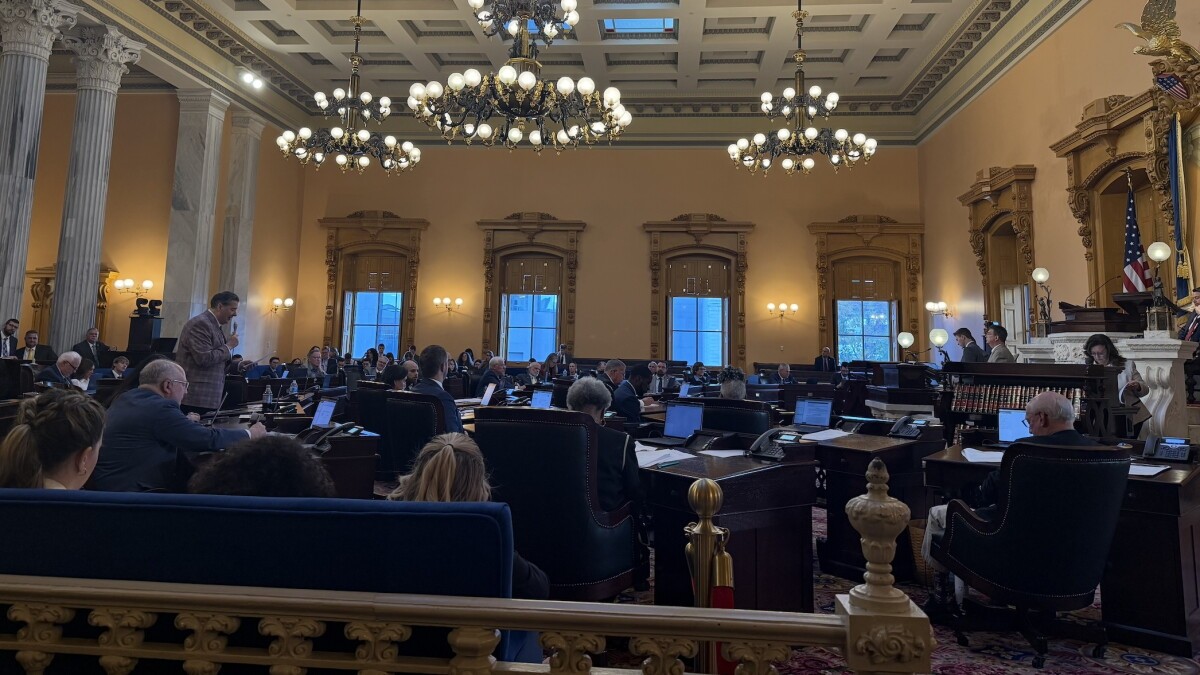
The Ohio Senate meets in floor session at the Ohio Statehouse in Columbus on Nov. 18, 2026.
Credit: Jo Ingles / Statehouse News Bureau Image source
Ohio lawmakers voted to send two new restrictions on abortion access to Gov. Mike DeWine's desk, WLWT Cincinnati reported. The approved measures include House Bill 324 and House Bill 347, according to WOSU Public Media.
Statehouse Republicans passed the legislation on one of the final lawmaking days of the two-year legislative session, Signal Ohio reported. The legislation marks the GOP's first significant legislative change on the subject since Ohio voters amended the state constitution in 2023 to guarantee women a right to abortion access without burden or interference from the state, according to Signal Ohio.
House Speaker Matt Huffman acknowledged that this could be the last opportunity to pass anti-abortion bills before Democratic Gov.-elect Dr. Amy Acton gets into office, News 5 Cleveland reported.
Telemedicine Restrictions and Mandated Waiting Periods
House Bill 324, titled the Patient Protection Act, bans prescribing mifepristone via telemedicine and establishes increased safety policies for drugs with high risks of severe side effects, WOSU Public Media reported. The measure also bans mail-order abortion pills, according to News 5 Cleveland. To receive medications subject to federal risk evaluation and mitigation strategy rules, doctors must examine a patient in person, schedule a follow-up, and explain specific side effects, News 5 Cleveland reported.
House Bill 347, known as the Share the Health and Empower With Informed Notices Act, mandates a 24-hour waiting period before an abortion, according to WOSU Public Media. If signed into law, the bill would require doctors to inform women about medical risks of abortion along with alternatives including adoption and parenting, Signal Ohio reported.
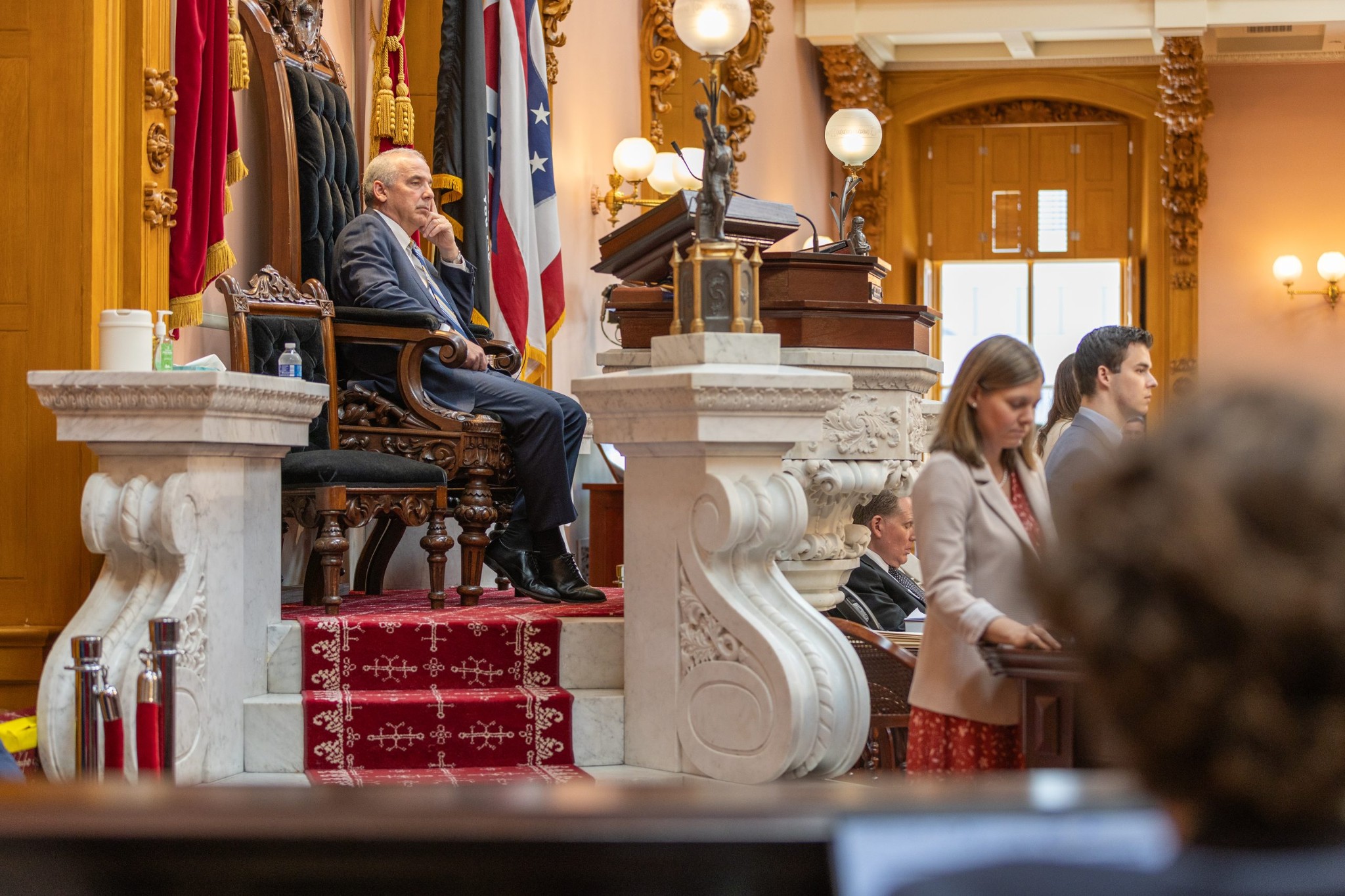
Ohio House Speaker Matt Huffman watches chamber proceedings from the rostrum dais at the Ohio Statehouse.
Credit: Mark Naymik / Signal Ohio Image source
Republican Leaders Defend Rules as Patient Protections
Senate President Rob McColley voted for the bills, calling them "measured approaches," WOSU Public Media reported. McColley told reporters that the legislation is looking out for patient health and informed consent rather than creating interferences and burdens, according to Signal Ohio.
House Speaker Matt Huffman described the waiting period as informational and argued that a 24-hour waiting period is "not overly burdensome," News 5 Cleveland reported. Sen. Steve Huffman said the waiting period under the SHE WINS Act makes sense considering the severity of the drugs, WOSU Public Media reported. He said the first visit must be in person because the Patient Protection Act affects 74 dangerous drugs, according to WOSU Public Media.
Physicians Warn of Regional Barriers and Treatment Delays
Advocates warned that reinstating waiting periods hurts women in reproductive healthcare deserts who live hours from clinics and must miss work and pay for overnight hotel stays, according to News 5 Cleveland. Dr. Catherine Romanos told News 5 Cleveland that the state is spending money trying to reinstate laws already blocked and make medical decisions best left between a doctor and their patient.
Dr. Annalise Celano said requiring in-person appointments threatens access to Suboxone, a life-saving medication used to treat substance use disorder when immediate care is most vital, WOSU Public Media reported. Danielle Firsich of Planned Parenthood told News 5 Cleveland that the legislation aims to override FDA guidance for prescribing mifepristone and other critical medications.
Constitutional Challenges and Pending Desk Action
A previous attempt to reinstate Ohio's waiting period was blocked by a Franklin County judge in 2024, WLWT Cincinnati reported. The Hamilton County Common Pleas Court also invalidated the state's 24-hour waiting period between consulting with a doctor and getting an abortion, according to WOSU Public Media.
Jessie Hill said the waiting period burdens abortion decisions, creates an unnecessary obstacle to healthcare, and has no medical purpose, WOSU Public Media reported. Speaking about the 24-hour waiting period, Hill promised an imminent lawsuit if the legislation is signed, Signal Ohio reported.
Both bills passed the Senate along party lines before heading to Gov. Mike DeWine, who has historically signed abortion restrictions, according to WOSU Public Media. DeWine has not announced whether he will sign or veto the legislation, News 5 Cleveland reported.
Video Watch video 0:48
How we know this
The sources and records behind this story, with the facts they support.
https://www.wlwt.com/article/ohio-lawmakers-new-abortion-restrictions-gov-dewine/74475905
Supporting evidence (2)
Ohio lawmakers voted to send two new restrictions on abortion access to Gov. Mike DeWine's desk, WLWT Cincinnati reported.
Read supporting passage
Ohio lawmakers are sending two new restrictions on abortion access to Gov. Mike DeWine's desk.
A previous attempt to reinstate Ohio's waiting period was blocked by a Franklin County judge in 2024, WLWT Cincinnati reported.
Read supporting passage
A previous attempt to reinstate the waiting period was blocked in 2024 by a Franklin County judge.
Supporting evidence (10)
The approved measures include House Bill 324 and House Bill 347, according to WOSU Public Media.
Read supporting passage
Republican senators approved House Bill 347, known as the Share the Health and Empower With Informed Notices (SHE WINS) Act, which would mandate a 24 -hour waiting period before an abortion. They also passed House Bill 324, which sponsors titled the Patient Protection Act.
House Bill 324, titled the Patient Protection Act, bans prescribing mifepristone via telemedicine and establishes increased safety policies for drugs with high risks of severe side effects, WOSU Public Media reported.
Read supporting passage
They also passed House Bill 324, which sponsors titled the Patient Protection Act. It establishes increased oversight and safety policies for patients prescribed medications with a high risk of severe side effects, and includes a ban on an abortion pill (Mifepristone) from being prescribed via telemedicine.
House Bill 347, known as the Share the Health and Empower With Informed Notices Act, mandates a 24-hour waiting period before an abortion, according to WOSU Public Media.
Read supporting passage
Republican senators approved House Bill 347, known as the Share the Health and Empower With Informed Notices (SHE WINS) Act, which would mandate a 24 -hour waiting period before an abortion.
Senate President Rob McColley voted for the bills, calling them "measured approaches," WOSU Public Media reported.
Read supporting passage
Senate President Rob McColley (R-Napoleon) voted for the bills, calling them "measured approaches."
Sen. Steve Huffman said the waiting period under the SHE WINS Act makes sense considering the severity of the drugs, WOSU Public Media reported.
Read supporting passage
Sen. Steve Huffman (R-Tipp City), who's also a doctor, said these bills are different than others that have been knocked down in court. Huffman said the waiting period under the SHE WINS Act makes sense considering the severity of the drugs.
He said the first visit must be in person because the Patient Protection Act affects 74 dangerous drugs, according to WOSU Public Media.
Read supporting passage
He said the Patient Protection Act focuses on potentially dangerous medications, not just those that induce abortion: "It affects 74 dangerous drugs and it just says that the first visit has to be in person because there again, they are dangerous drugs," Huffman said.
Dr. Annalise Celano said requiring in-person appointments threatens access to Suboxone, a life-saving medication used to treat substance use disorder when immediate care is most vital, WOSU Public Media reported.
Read supporting passage
"Suboxone is a life-saving medication, and it is very safe to use for a lot of our patients with the correct instruction," Celano said. "When someone is struggling with substance use disorder, and they seek help, it is really, really hard for them to always be able to get to an in-person appointment, and something that's the most vital and most life-saving in that moment is getting them access to the medicines that they need."
The Hamilton County Common Pleas Court also invalidated the state's 24-hour waiting period between consulting with a doctor and getting an abortion, according to WOSU Public Media.
Read supporting passage
Hill recently argued in the Hamilton County Common Pleas Court against laws that are still on the books. That court invalidated the state's 24-hour waiting period between consulting with a doctor for an abortion and actually getting the procedure.
Jessie Hill said the waiting period burdens abortion decisions, creates an unnecessary obstacle to healthcare, and has no medical purpose, WOSU Public Media reported.
Read supporting passage
"It burdens people's abortion decision, it creates an unnecessary obstacle and is in the way of people's access to healthcare, and it has no medical purpose," Hill said. "That has already been found to be unconstitutional under the Reproductive Freedom Amendment."
Both bills passed the Senate along party lines before heading to Gov. Mike DeWine, who has historically signed abortion restrictions, according to WOSU Public Media.
Read supporting passage
Both bills passed the Senate along party lines. The House agreed with the changes made by the Senate. So the legislation is off to Gov. Mike DeWine, who has historically signed abortion restrictions.
https://signalohio.org/ohio-republicans-pass-new-abortion-restrictions-setting-up-legal-fight/
Supporting evidence (5)
Statehouse Republicans passed the legislation on one of the final lawmaking days of the two-year legislative session, Signal Ohio reported.
Read supporting passage
Statehouse Republicans passed two major policy changes Wednesday that would restrict both medication-induced and surgical abortions. The legislation was pushed through on one of the final lawmaking days of the two-year legislative session.
The legislation marks the GOP's first significant legislative change on the subject since Ohio voters amended the state constitution in 2023 to guarantee women a right to abortion access without burden or interference from the state, according to Signal Ohio.
Read supporting passage
It also marks the GOP’s first significant legislative change on the subject since Ohio voters amended the state’s constitution in 2023 to guarantee women a right to abortion access until the point of fetal viability without “burden” or “interference” from the state.
If signed into law, the bill would require doctors to inform women about medical risks of abortion along with alternatives including adoption and parenting, Signal Ohio reported.
Read supporting passage
If signed into law, the bill would require doctors to tell women about the medical risks of abortion – which medical groups say are low and overstated by the bill’s backers – along with “alternatives to abortion, including adoption and parenting.”
McColley told reporters that the legislation is looking out for patient health and informed consent rather than creating interferences and burdens, according to Signal Ohio.
Read supporting passage
“It’s not so much ‘interferences and burdens’ as it is looking out for patient health, patients’ informed consent, allowing the patient to have the conversation about the procedure or the drug they’re about to take and make an informed decision based on that,” Senate President Rob McColley, a Republican, told reporters on Wednesday.
Speaking about the 24-hour waiting period, Hill promised an imminent lawsuit if the legislation is signed, Signal Ohio reported.
Read supporting passage
Speaking about the 24-hour waiting period, Jessie Hill, an ACLU attorney, promised an “imminent” lawsuit if the bill is signed.
Supporting evidence (8)
House Speaker Matt Huffman acknowledged that this could be the last opportunity to pass anti-abortion bills before Democratic Gov.-elect Dr. Amy Acton gets into office, News 5 Cleveland reported.
Read supporting passage
The speaker acknowledged that this could be the last opportunity to pass anti-abortion bills before Democratic Gov.-elect Dr. Amy Acton gets into office.
The measure also bans mail-order abortion pills, according to News 5 Cleveland.
Read supporting passage
State Reps. Adam Mathews (R-Lebanon) and Meredith Craig (R-Smithville) sponsored House Bill 324, which would ban mail-order abortion pills.
To receive medications subject to federal risk evaluation and mitigation strategy rules, doctors must examine a patient in person, schedule a follow-up, and explain specific side effects, News 5 Cleveland reported.
Read supporting passage
To get a medication subject to the FDA's risk evaluation and mitigation strategy (REMS), doctors must examine a patient in person, schedule a follow-up, and explain that the drug has specific side effects. Mifepristone, the most common abortion pill, is on the list.
House Speaker Matt Huffman described the waiting period as informational and argued that a 24-hour waiting period is "not overly burdensome," News 5 Cleveland reported.
Read supporting passage
"This is really one of those information bills; we want people to know what they're doing when it comes to that..." House Speaker Matt Huffman (R-Lima) said. "And a 24-hour waiting period... That's not overly burdensome."
Advocates warned that reinstating waiting periods hurts women in reproductive healthcare deserts who live hours from clinics and must miss work and pay for overnight hotel stays, according to News 5 Cleveland.
Read supporting passage
Advocates have said that this hurts women in reproductive healthcare deserts, areas where there isn't a clinic for hours. Oftentimes, patients will have to take off work to drive to a city and pay for a hotel overnight in order to get care, according to Abortion Forward, an organization dedicated to defending reproductive rights.
Dr. Catherine Romanos told News 5 Cleveland that the state is spending money trying to reinstate laws already blocked and make medical decisions best left between a doctor and their patient.
Read supporting passage
"Now the state is spending even more money trying to reinstate laws that have already been blocked or make medical decisions that are best left between a doctor and their patient," Dr. Romanos said.
Danielle Firsich of Planned Parenthood told News 5 Cleveland that the legislation aims to override FDA guidance for prescribing mifepristone and other critical medications.
Read supporting passage
"Instead of defying clear state constitutional protections by targeting a single abortion medication, this legislation aims to ham-handedly shift our focus and override the FDA’s guidance for prescribing mifepristone and other critical medications," Planned Parenthood's Danielle Firsich said.
DeWine has not announced whether he will sign or veto the legislation, News 5 Cleveland reported.
Read supporting passage
DeWine hasn't said whether he will sign or veto.